
In recent years, more breweries are moving toward automation. From manual operation to intelligent control, automatic brewery equipment is becoming a standard in modern brewing.
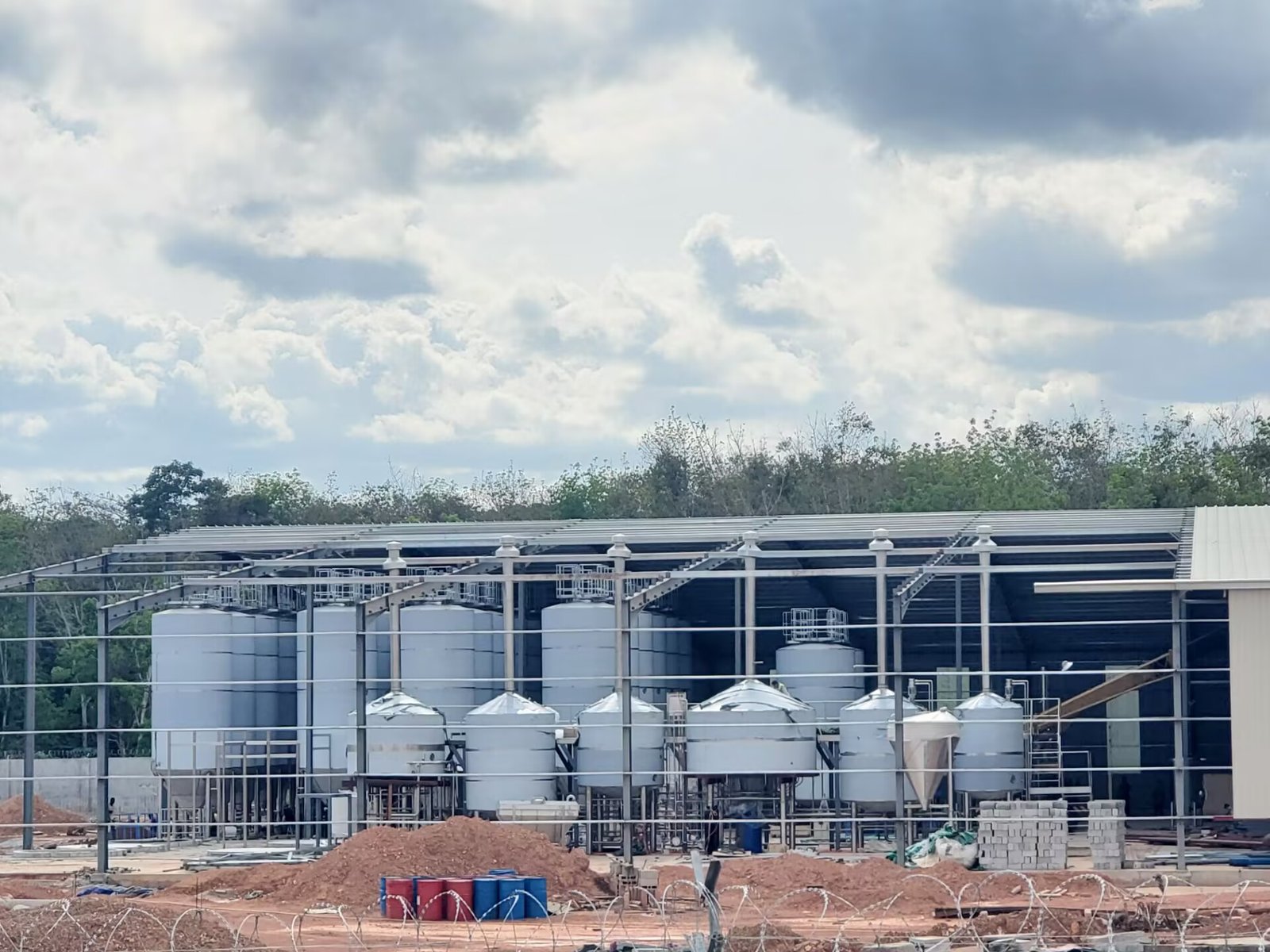
At the center of any automatic brewery equipment control system is the PLC (Programmable Logic Controller).
It works as the “brain” of the system, managing pumps, valves, temperature, and process logic.
However, many brewery owners face the same question:
Should I choose PLC 1200 or PLC 1500?
In this article, we explain this in a simple and practical way, based on real brewery equipment projects.
1. First, Understand the Core Difference
Both PLC 1200 and PLC 1500 are widely used in automatic brewery equipment control, but they are designed for different levels of automation.
PLC 1200
Suitable for small to medium systems. It is cost-effective and reliable for standard automation tasks.
PLC 1500
Designed for larger and more complex systems. It offers stronger processing power, faster response, and better scalability.
In simple terms:
👉 PLC 1200 = practical and efficient
👉 PLC 1500 = powerful and expandable
2. The Most Important Factor: Control Points (I/O)
In real automatic brewery equipment projects, the key factor is not price or model first.
👉 The key is: How many control points (I/O) do you need?
A control point is any signal that the PLC needs to receive or send.
Digital Signals (DI / DO)
- DI (Digital Input): signals from switches, sensors, buttons
- DO (Digital Output): control signals for motors, valves, alarms
👉 Only two states: ON or OFF
Analog Signals (AI / AO)
- AI (Analog Input): temperature, pressure, level (4–20mA, PT100)
- AO (Analog Output): speed control, valve adjustment
👉 Continuous signals for precise control
3. Example: Mash Tun I/O Calculation
Let’s take one mash tun in a typical automatic brewery equipment setup:
- Agitator motor: 1 DI + 2 DO + 1 AO
- Alarm: 1 DO
- Transfer pump: 1 DI + 1 DO + 1 AO
- Temperature sensor (PT100): 1 AI
- Empty level switch: 1 DI
- Level transmitter: 1 AI
- Manhole switch: 1 DI
- Tank light: 1 DI + 1 DO
- Pneumatic valves (2 units): 2 DO
- pH meter: 1 AI
- Slide valve: 1 DO
- Pressure sensor: 1 AI
Summary:
- DI: 4
- DO: 7
- AI: 4
- AO: 2
👉 Total: 4 DI + 7 DO + 4 AI + 2 AO
This is only one unit, but it already shows how signals add up quickly in brewery automatic control.
4. From One Tank to Real Project Calculation
In real projects, PLC selection should always be based on actual I/O calculation, not general assumptions.
The mash tun example is only a starting point.
You also need to consider:
- Number of brewhouse vessels (2V / 3V / 4V)
- Number of fermentation tanks (FVs)
- Number of BBTs
- Valve quantity (manual or pneumatic)
- Instrument level (basic or with flow, pressure, PID)
- CIP system (manual or automatic)
👉 All these directly affect your DI / DO / AI / AO quantity.
The correct approach is simple:
List equipment → define signals → calculate I/O
5. How to Choose PLC 1200 or 1500
Based on practical project experience:
PLC 1200 is suitable for:
- Small to medium brewery equipment systems
- Limited number of valves and analog instruments
- Basic process control (temperature, pumps, simple logic)
- No advanced data or remote system required
👉 Simple, stable, cost-effective
PLC 1500 is suitable for:
- Large or highly automatic brewery equipment
- More analog signals (flow, pressure, PID control)
- Integrated control (brewhouse + fermentation + CIP)
- Need for data logging, remote access, or SCADA
👉 More signals, more logic, more flexibility
6. A More Practical Way to Think
Instead of asking:
“Should I choose PLC 1200 or 1500?”
A better question is:
👉 How many signals do I really need to control?
In brewery automatic control,
the PLC is only a tool.
👉 The process defines the system, not the model number.
A good system is not the most expensive one,
but the one that fits your process best.
7. About Your Project
Every brewery is different. Even with the same capacity, automation requirements can vary a lot.
Some breweries prefer simple and reliable control.
Others need higher automation, data tracking, and remote management.
At TIANTAI, we do not start from a fixed PLC model.
We start from your process:
- What kind of beer you produce
- How many tanks you have
- How you plan to operate
- What level of automation you expect
Then we help define signals and select a suitable PLC solution.
If you are planning a new automatic brewery equipment project or upgrading your current automatic brewery equipment, feel free to share your layout or ideas.
We are happy to provide a clear and practical suggestion for your brewery automatic control system.
Edit by Jane
E:gbrewing@cnbrewery.com