
What is a Carbonation Stone?
A carbonation stone is a device used to diffuse carbon dioxide (CO₂) into beer or other beverages. It is commonly made from naturally porous stone, porous ceramic, or sintered stainless steel.
In brewery applications, carbonation stones are usually installed inside bright tanks or serving tanks. They are also used in inline systems for continuous carbonation.
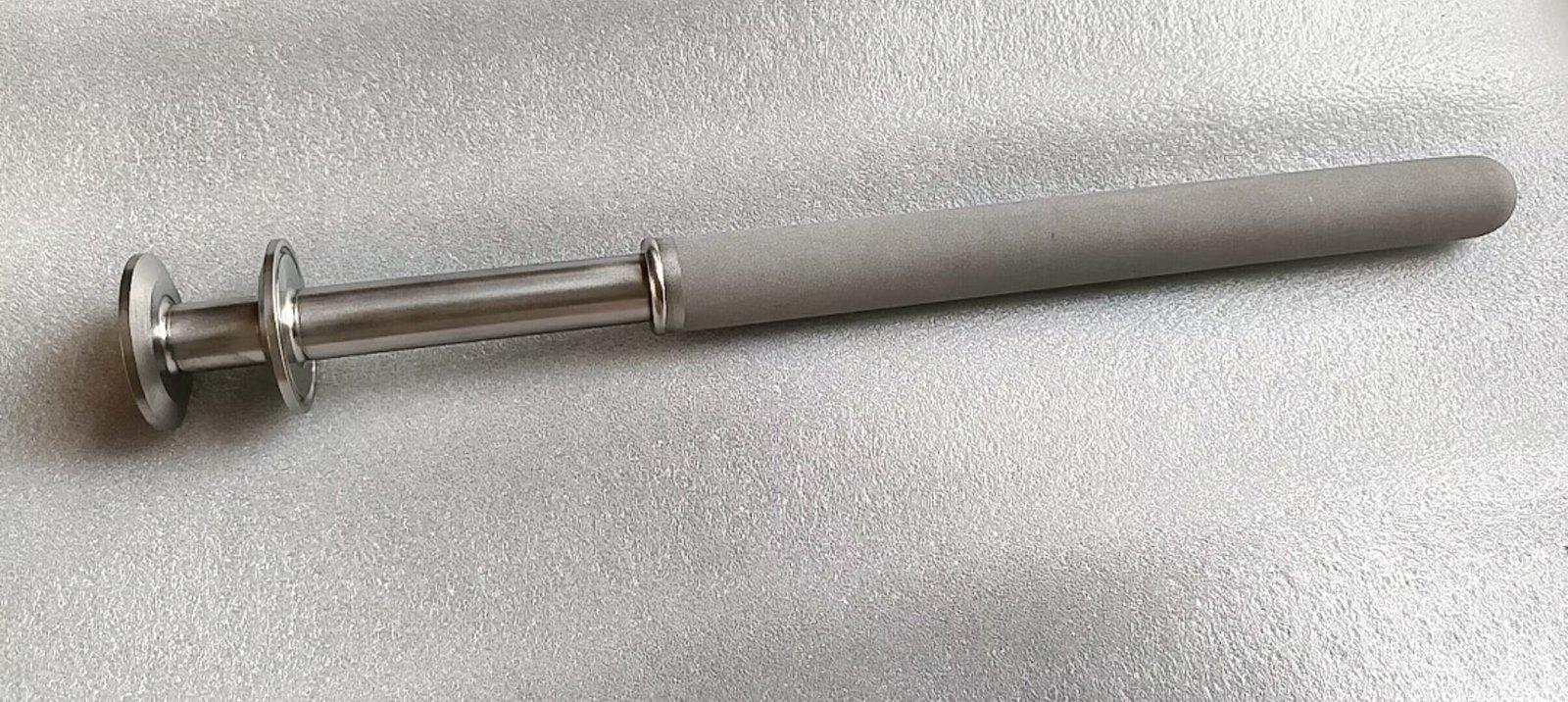
The stone is typically a hollow cylinder with one sealed end. CO₂ is introduced under pressure and diffuses through the porous surface, forming very fine bubbles. These small bubbles dissolve efficiently into the liquid before reaching the surface.
Carbonation stones can be used for:
- Carbonating flat beer
- Adjusting CO₂ levels before packaging or serving
- Removing dissolved oxygen from beer or water
How to Use a Carbonation Stone
Using a carbonation stone can significantly reduce carbonation time, typically to around 30–60 minutes depending on conditions.
Step 1: Cooling the Beer
Ensure the beer is properly chilled before carbonation, ideally between 34–40°F (1–4°C). Lower temperatures improve CO₂ solubility.
Step 2: Installation
After fermentation is complete and the beer is ready for carbonation, attach a sanitized carbonation stone to the racking port of the conical fermentation tank or bright tank.
Step 3: Start Low Pressure
Begin with no pressure on the regulator, then gradually increase to 1–2 psi. Hold for 4–5 minutes to allow initial absorption.
Step 4: Gradual Pressure Increase
Increase pressure in small increments of 1–2 psi, waiting 4–5 minutes between each step until reaching approximately 14–16 psi.
Step 5: Check Carbonation Level
Take a sample to check carbonation level. If the desired level is reached, you may:
- Remove the stone, or
- Keep it in place and reduce pressure to serving pressure
If carbonation is insufficient, continue increasing pressure gradually until the desired level is achieved.
How to Clean a Carbonation Stone
Proper cleaning is essential to maintain performance and prevent clogging.
Step 1: Chemical Soak
After use, soak the carbonation stone in a brewery alkaline wash or similar cleaning solution for at least 24 hours.
Step 2: Backflushing with CO₂
After soaking, rinse with warm water while connecting the stone to a CO₂ line. This helps push residual cleaning solution and debris out of the porous structure.
Step 3: Final Rinse and Sanitizing
Before next use:
- Rinse again with clean water
- Soak in sanitizer for a few minutes
This ensures the stone is clean and ready for safe use in brewing.
Carbonation stones are an efficient tool for achieving consistent carbonation in beer production. Proper use and cleaning help maintain stable performance, improve carbonation efficiency, and extend equipment lifespan.
For breweries looking for carbonation systems, bright tanks, or complete brewery equipment solutions, Tiantai Brewtech provides reliable stainless steel equipment and professional brewing support.
If you have any questions about carbonation stones, brewery equipment, or carbonation systems, feel free to contact us. Our team is ready to support your brewing project with suitable equipment solutions.
👤 Cassie
📧 tiantaibrewery@cnbrewery.com