
After the mashing process, the macromolecular substances in malt have been properly broken down, and the brewing process enters the wort filtration (lautering) and sparging stage.
Wort filtration refers to the process in which liquid passes through a porous medium under external force, while solid particles are retained on the filter bed, achieving solid-liquid separation. In a brewery equipment system, this process is typically carried out in a lauter tun or mash filter tank.
The main purpose of wort filtration is to quickly separate the soluble extract from the spent grains in the shortest possible time, obtaining clear wort. At the same time, brewers aim to maximize extract efficiency, reduce oxidation, and preserve the color and aroma quality of the wort.
However, in practical brewery equipment operation, two common problems often occur: difficult wort filtration and slow filtration speed. These issues can significantly affect brewhouse efficiency and beer quality.
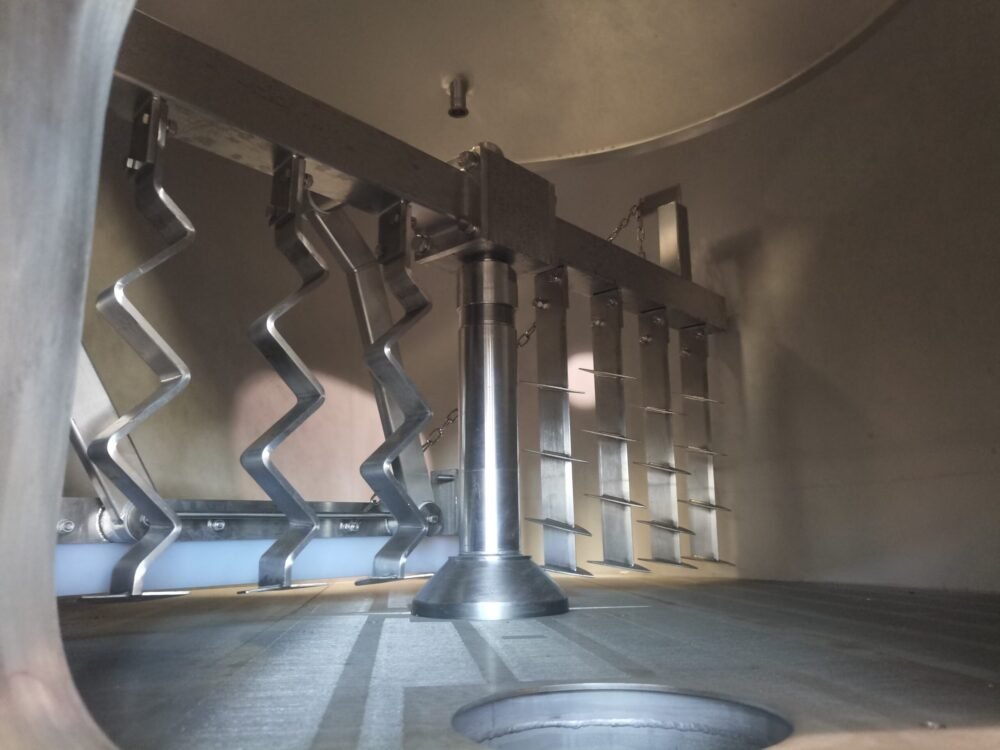
1. Difficult Wort Filtration in Brewery Equipment
During lautering, filtration difficulties may occur due to several reasons. These problems can usually be analyzed and solved from the following aspects:
(1) Incomplete mashing conversion
If saccharification is incomplete, the wort viscosity will increase, leading to poor filtration performance.
In brewery equipment operation, this can be checked by performing an iodine test on-site or in the laboratory to confirm starch conversion efficiency.
(2) Poor wort clarity after mashing
Cloudy wort may indicate insufficient protein breakdown or poor β-glucan degradation.
This often results in high wort viscosity and slow runoff in the lauter tun. In this case, the mashing program of the brewhouse system should be optimized, especially protein rest and enzyme activity control.
(3) Incorrect filtration operation
If the initial wort runoff speed is too fast, it may damage the grain bed (filter bed), causing compaction and blocking flow channels.
In brewery equipment operation, the filter bed should be carefully formed and allowed to stabilize before increasing runoff speed.
(4) Temperature drop in mash
If the mash temperature drops too much during filtration, wort viscosity increases and flow becomes difficult.
Adding a small amount of hot water or maintaining proper insulation in the mash/lauter tun system can help stabilize filtration performance.
2. Slow Wort Filtration Speed in Brewery Equipment
Slow lautering is one of the most common efficiency problems in brewery systems. It can be solved from three perspectives: operation, process, and equipment.
(1) Operational solutions in brewhouse equipment
a. Perform top-water loosening: close the wort outlet valve and use 75–80°C hot water from the bottom of the lauter tun to lift and loosen the grain bed. Start the rake system, mix for 5–10 minutes, then restart filtration.
b. Rebuild the filter bed: lower the rake to the lowest position, stir until the grain bed is uniform, allow it to settle, and restart wort clarification and filtration.
c. During lautering and sparging, use intermittent raking to prevent grain bed compaction. Adjust rake height based on sparging speed to reduce grain adhesion.
(2) Process optimization for brewery equipment
a. Optimize raw material ratio and malt milling degree to ensure proper husk structure for filtration.
b. Use a proper low-temperature protein rest to improve mash flowability and extend saccharification time if needed.
c. Add β-glucanase enzyme when necessary to reduce mash viscosity and improve wort runoff efficiency.
(3) Equipment-related improvements
a. Ensure regular cleaning of brewery equipment, especially the false bottom or sieve plate, to prevent blockage.
b. Use a well-designed rake (cultivator system) in the lauter tun to avoid channeling and compaction.
c. Improve insulation of the filter tank to maintain stable mash temperature throughout the filtration process.
Efficient wort filtration is essential for improving brewhouse performance and beer quality. In modern brewery equipment systems, most filtration issues can be solved through proper mash control, optimized operating procedures, and well-designed lautering equipment.
By improving both process and equipment configuration, breweries can significantly reduce filtration problems, increase extraction efficiency, and achieve more stable production results.
👤 Cassie
📧 tiantaibrewery@cnbrewery.com