
In commercial beer brewing, fermentation is the core process that determines beer flavor, aroma, clarity and stability, while yeast pitching is the primary prerequisite for successful fermentation. Unscientific yeast pitching methods easily lead to slow fermentation, incomplete attenuation, peculiar flavors, yeast autolysis and other problems, which greatly reduce beer quality and batch consistency.
A mature beer brewing system is not only composed of high-quality brewhouse and fermentation tanks, but also needs standardized yeast pitching processes matching professional brewery equipment. As a professional brewery equipment manufacturer, Tiantai Brewtech summarizes practical, stable and commercial-grade yeast pitching methods for beer brewing systems in this guide, helping breweries of all sizes standardize operations, reduce loss and improve product competitiveness.
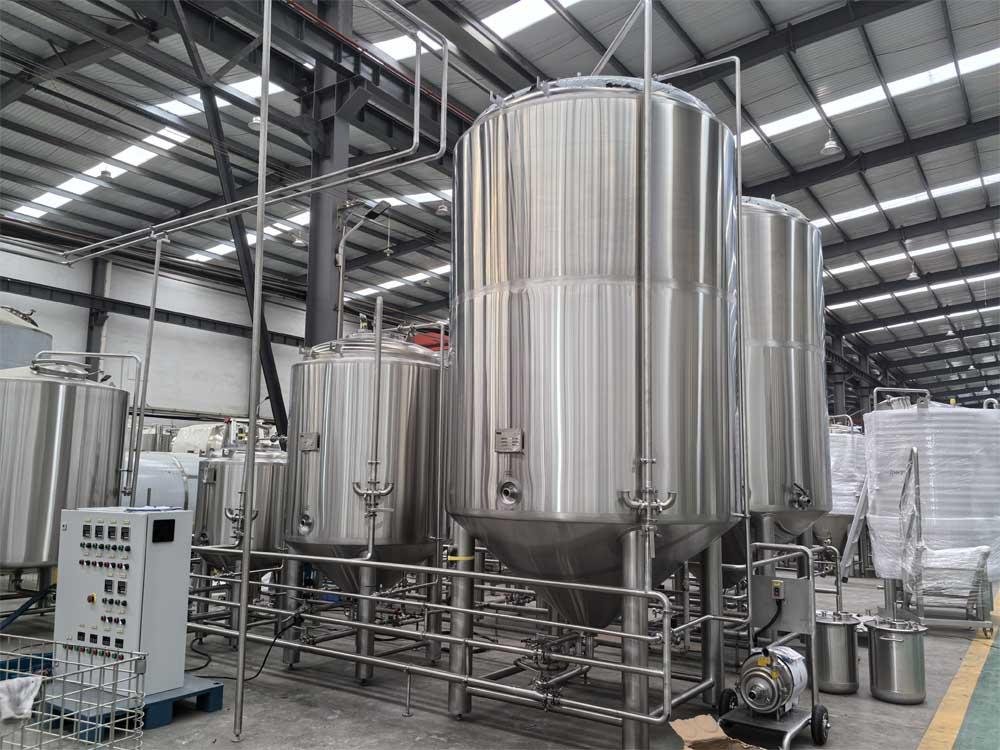
Why Scientific Yeast Pitching Matters for Commercial Brewing
Many craft breweries and industrial breweries ignore the correlation between yeast pitching methods and brewery equipment operation. In fact, yeast quantity, activity, pitching temperature and operation mode directly adapt to the parameters of fermentation equipment, which affects the overall brewing effect.
Reasonable yeast pitching management brings core benefits to beer brewing systems:
-
Stable fermentation cycle: Avoid delayed fermentation and batch cycle confusion caused by insufficient yeast activity or unreasonable pitching rate
-
Pure beer flavor: Reduce off-flavors such as ester excess, diacetyl residue and sulfur odor caused by improper pitching
-
High production efficiency: Adapt to the continuous operation of commercial brewery equipment, reduce equipment idle time and material waste
-
Good batch consistency: Standardized pitching processes make each batch of beer stable in flavor, color and taste, suitable for mass production
3 Mainstream Yeast Pitching Methods in Commercial Beer Brewing Systems
Combined with different production scales, fermentation equipment configurations and beer styles, modern commercial brewing mainly adopts three mature yeast pitching methods, which can be perfectly matched with Tiantai’s complete set of brewery fermentation equipment to realize standardized production.
1. Direct Yeast Pitching Method (Dry & Liquid Yeast Direct Input)
Direct pitching is the most common and basic method for small and medium-sized breweries. It refers to directly putting quantitative commercial dry yeast or liquid yeast into cooled and aerated wort to start fermentation, which is simple in operation and low in threshold.
Operating essentials: For dry yeast, strict rehydration treatment is required before pitching. Soak the dry yeast in sterile warm water at 25–30℃ to activate dormant yeast cells, which can effectively improve yeast activity and survival rate. For liquid yeast, it can be directly pitched according to the batch volume after temperature adaptation. The standard pitching rate is 0.75–1.5 million viable yeast cells per milliliter of wort per degree Plato, with lager beer requiring a higher pitching rate than ale beer.
Equipment matching & advantages: This method is suitable for Tiantai’s 100L–5000L small and medium beer brewing systems and single fermentation tank units. It features simple operation, low equipment configuration requirements and short preparation time, which is very suitable for craft breweries, hotel breweries and new brewing projects.
Notes: Avoid excessive or insufficient pitching. Excessive yeast pitching causes yeast autolysis and bitter taste, while insufficient pitching leads to prolonged fermentation and mixed flavor substances.
2. Yeast Starter Propagation Pitching Method
Yeast propagation pitching is a high-precision method widely used in medium and large industrial breweries. It refers to expanding yeast strains step by step through a yeast propagation system to obtain sufficient high-activity viable yeast bacteria liquid, and then pitching it into the main fermentation tank for mass fermentation.
Operating essentials: Adopt a step-up propagation mode: start with a small dose of original yeast strain to prepare a small-volume starter wort, and after the yeast is fully activated and propagated, expand it to a medium and large propagation tank step by step to ensure the activity and purity of yeast cells. Before pitching, strictly detect the yeast viability and bacteria-free rate to avoid miscellaneous bacteria contamination affecting fermentation quality.
Equipment matching & advantages: Tiantai’s professional beer yeast propagation equipment and supporting fermentation system perfectly adapt to this process. The propagation pitching method can greatly reduce the cost of commercial yeast, ensure 100% pure yeast strains, significantly improve fermentation stability, and is suitable for large-scale continuous production of industrial breweries with stable output and high quality requirements.
3. Yeast Slurry Repitching (Reuse) Method
Yeast slurry repitching is an economical and efficient cyclic pitching process for commercial brewing. After the end of primary fermentation, collect the fresh, clean and high-activity yeast slurry deposited at the bottom of the fermentation tank, and after purification, disinfection and activity detection, reuse it for the next batch of wort fermentation.
Operating essentials: Harvest yeast slurry 1–2 °P before the terminal gravity of fermentation to ensure the best yeast activity. Remove dead yeast, protein precipitation and impurities, store the yeast slurry in a low-temperature sterile environment, and strictly control the number of reuse generations (usually 5–8 generations for commercial production) to avoid strain degradation and flavor mutation.
Equipment matching & advantages: This method is matched with Tiantai’s fully sealed fermentation tanks and yeast recovery systems. It greatly saves yeast procurement costs, shortens the yeast activation cycle, improves equipment utilization rate, and is the preferred cyclic production process for medium and large breweries.
Key Factors Affecting Yeast Pitching Effect & Equipment Coordination
No matter which pitching method is adopted, the coordination between process parameters and brewery equipment is the key to stable fermentation. Tiantai Brewtech summarizes three core control points for customers:
1. Wort Oxygenation & Sterilization
Yeast propagation and fermentation require sufficient dissolved oxygen. The professional oxygenation system supporting Tiantai beer brewing equipment can accurately control dissolved oxygen content, fully activate yeast activity. At the same time, the fully sterile pipeline and tank body design avoid miscellaneous bacteria pollution during pitching, ensuring pure fermentation environment.
2. Pitching Temperature Control
Ale yeast is suitable for pitching at 18–22℃, and lager yeast at 8–12℃. Tiantai’s constant-temperature fermentation tank has precise temperature control function, which can stabilize the pitching and fermentation temperature in real time, prevent yeast activity failure caused by temperature fluctuation, and avoid flavor defects.
3. Accurate Pitching Rate Matching
High-gravity wort needs a higher yeast pitching rate. Combined with the batch volume and original gravity of the brewing system, standardized pitching parameters are formulated to match different equipment models, realizing precise quantitative pitching and avoiding quality differences.
How Tiantai Brewtech Equipment Optimizes Yeast Pitching & Fermentation
As a professional brewery equipment manufacturer focusing on commercial beer brewing systems, Tiantai Brewtech integrates years of brewing process experience and equipment R&D experience to optimize the whole link of yeast pitching and fermentation:
-
Full-series supporting equipment: Complete configuration from yeast propagation tank, sterile pitching pipeline to constant-temperature fermentation tank, adapting to direct pitching, propagation pitching and cyclic repitching of all scales
-
Intelligent parameter control: The equipment supports precise adjustment of temperature, dissolved oxygen and pressure, matching standardized yeast pitching processes to reduce manual operation errors
-
High aseptic rate design: Fully sealed food-grade stainless steel structure, sterile pipeline transmission, effectively prevent yeast contamination and ensure brewing safety
-
Customized solutions: Provide personalized brewing system solutions for craft breweries, industrial breweries and hotel breweries, matching the most suitable yeast pitching process according to production scale and beer style
Yeast pitching method is the key link connecting brewing technology and brewery equipment. Scientific and standardized yeast pitching operation can maximize the performance of beer brewing systems, stabilize beer quality, reduce production costs and improve production efficiency.
Whether you are a new craft brewery or a large-scale industrial brewing project, choosing the right yeast pitching process and supporting professional brewery equipment is the foundation of long-term stable production. Tiantai Brewtech provides one-stop brewery equipment solutions and professional brewing process guidance, helping global brewing customers master standardized yeast pitching technology and produce high-quality consistent craft beer and industrial beer.
Get customized beer brewing system solutions and professional fermentation process guidance from Tiantai Brewtech now!
👤 Cassie
📧 tiantaibrewery@cnbrewery.com
📧 tiantaibrewery@cnbrewery.com