
What Is a PET Keg?
A PET keg is a lightweight, food-grade plastic beer container made of polyethylene terephthalate, specially designed for storing, transporting and dispensing draft beer. Common specifications include 10L and 20L reusable sizes, equipped with standard keg spear interfaces to match professional brewery cleaning and filling equipment.

Different from traditional stainless steel kegs, PET kegs are divided into disposable single-use kegs and reusable circulating kegs. Reusable PET kegs are widely adopted in modern craft breweries, brewpubs and local draft beer distribution businesses. They can be repeatedly cleaned, disinfected and refilled, providing flexible and low-cost packaging solutions for small and medium-sized breweries.
Although PET kegs undertake the same beer storage and sealing functions as metal kegs, their plastic material brings unique physical limitations. PET kegs cannot resist high temperature, have lower pressure tolerance, and are more likely to form inner wall scratches after long-term reuse. These characteristics determine that PET kegs cannot apply the same cleaning and filling procedures as stainless steel kegs, requiring dedicated professional equipment and standardized operation processes.
Why Do Breweries Prefer to Use PET Kegs?
Nowadays, more craft breweries choose PET kegs to replace part of stainless steel kegs in daily draft beer production and distribution, mainly due to their prominent advantages in weight, cost and practicability.
First, PET kegs are ultra-lightweight. The empty weight of a PET keg is far lighter than a stainless steel keg, greatly reducing manual handling intensity. It effectively avoids labor fatigue and handling injuries during keg loading, unloading and delivery, saving labor costs for breweries.
Second, PET kegs greatly reduce logistics and transportation costs. Light empty kegs reduce vehicle load weight, allowing delivery trucks to carry more kegs per trip. For breweries focusing on regional short-distance distribution and pub supporting supply, PET kegs significantly lower long-term operating and transportation expenses.
Third, PET plastic has excellent toughness and anti-collision performance. Unlike stainless steel kegs that produce permanent dents after collision and extrusion, PET kegs can resist minor impact and extrusion deformation during transportation and stacking, maintaining intact appearance and stable internal sealing performance.
Fourth, PET kegs have low initial investment cost. The procurement price of reusable PET kegs is much lower than stainless steel kegs, which is very friendly for start-up breweries and small-scale production workshops, helping them quickly launch bulk draft beer business with low budget.
Meanwhile, PET kegs have obvious limitations. They cannot withstand high-temperature steam sterilization, have limited pressure bearing capacity, and are prone to inner wall scratches. These shortcomings require standardized low-temperature cleaning and low-pressure filling processes, as well as professional PET-specific keg washers and fillers to ensure beer quality and keg service life.
PET Keg Washing VS Stainless Steel Keg Washing: Differences and Key Precautions
Stainless steel kegs feature high temperature resistance and high pressure resistance. The conventional cleaning process for stainless kegs includes alkaline circulation cleaning, acid liquid descaling, high-temperature steam sterilization and hot water rinsing. High-temperature steam can thoroughly kill residual yeast, bacteria and microorganisms inside the kegs, achieving efficient and thorough sanitary cleaning.
However, high-temperature steam and hot water are fatal to PET kegs. High temperature will soften, deform and whiten the plastic keg body, causing permanent damage and scrapping. Therefore, steam sterilization is strictly prohibited for all PET keg cleaning work. PET kegs must adopt low-temperature chemical disinfection and soft pulse flushing processes to balance cleaning hygiene and keg protection.
Working Procedure of Tiantai PET Keg Washer
Start → Pulse sanitizer cleaning → Pulse fresh water rinsing → Stop
Production Capacity: 80–90 kegs per hour
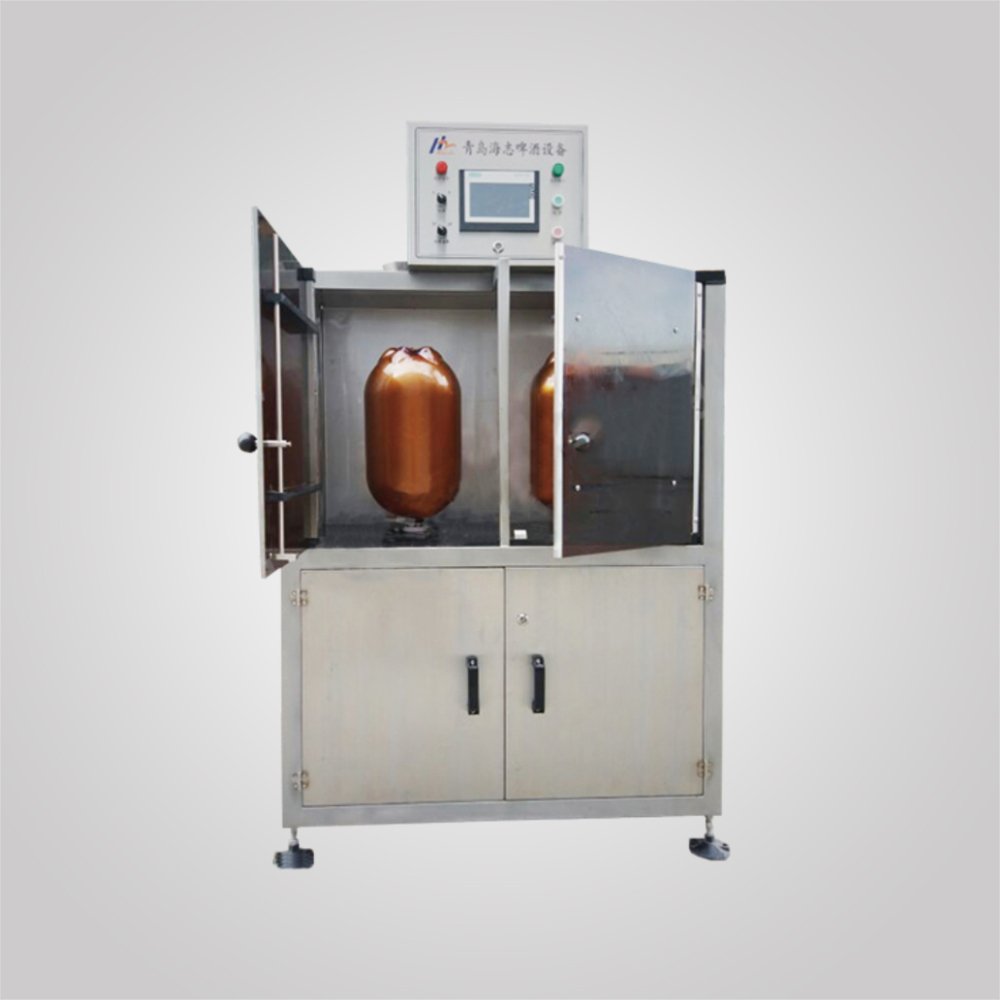
Core Differences and Operation Notes
- Completely cancel high-temperature steam sterilization. Adopt food-grade sanitizer pulse cleaning to realize full disinfection, avoiding microbial contamination without damaging the PET keg structure.
- Adopt professional pulse flushing technology. Intermittent soft water impact thoroughly removes residual beer liquid, yeast sediment and organic dirt, while preventing hard friction scratches on the keg inner wall. Smooth inner walls avoid dirt and bacteria residue during repeated reuse.
- Strictly control sanitizer concentration and cleaning cycle. Excessive chemical concentration will accelerate plastic aging and embrittlement. The matched pulse cleaning program ensures cleaning effect and prolongs keg service life.
- Strict pre-cleaning inspection. Eliminate all deformed, cracked, whitened and severely scratched PET kegs to prevent unqualified kegs from entering production and causing beer quality problems.
PET Keg Filling VS Stainless Steel Keg Filling: Differences and Key Guidelines
Stainless steel kegs have high structural strength and strong pressure resistance, supporting high back-pressure isobaric filling with fast speed and stable effect. In contrast, PET kegs have weak pressure tolerance. Excessive filling pressure and overfilling will cause keg bulging, deformation and even leakage risks. Thus, PET keg filling must adopt dedicated low-pressure isobaric filling mode, which is completely different from stainless steel keg filling parameters.
Working Procedure of Tiantai PET Keg Filler
Keg on→ Arm up → Open keg spear →CO2 Pressured → Filling → Close keg spear → Arm down → Keg off
Production Capacity: 60–100 kegs per hour

Core Filling Differences and Precautions
- Must conduct CO₂ pre-pressurization before filling. Isobaric filling balances the pressure inside the keg and the filling pipeline, effectively reducing beer foaming, overflow and oxygen inhalation, and retaining fresh beer flavor.
- Strictly control filling volume and reserve safe headspace. The internal pressure of PET kegs will rise with temperature increase. Overfilling will cause excessive internal pressure and lead to keg deformation or rupture.
- Ensure tight sealing of the keg spear interface. Air leakage and pressure loss will cause beer oxidation, resulting in off-flavors and shortened shelf life of draft beer.
- Never use stainless steel keg filling pressure parameters. Excess working pressure will damage the PET keg structure and cause safety hazards.
Introduction of Tiantai Professional PET Keg Washer and PET Keg Filler
Tiantai independently develops and manufactures professional PET Keg Washer and PET Keg Filler, specially customized for reusable plastic beer kegs, perfectly solving the cleaning and filling pain points of PET kegs for craft breweries.
The Tiantai PET Keg Washer abandons the traditional high-temperature steam process and adopts a professional two-stage pulse cleaning program: pulse sanitizer cleaning and pulse fresh water rinsing. The soft pulse flushing design removes internal dirt and achieves full disinfection without scratching or deforming the keg body. With a stable production capacity of 80–90 kegs per hour, it fully meets the batch cleaning needs of small and medium-sized breweries. All contact parts are made of food-grade stainless steel, which is corrosion-resistant, safe and hygienic, supporting long-term stable cyclic cleaning of PET kegs.
The Tiantai PET Keg Filler follows standardized low-pressure isobaric filling logic. The complete automatic working process includes keg placing, arm lifting, spear opening, CO₂ pre-pressurization, quantitative filling, spear closing, arm lowering and keg unloading. With an hourly output of 60–100 kegs, it realizes low-oxidation, low-foam and stable filling. It effectively avoids PET keg deformation caused by high pressure, locks the fresh aroma of draft beer, and ensures consistent batch filling quality.
Tiantai PET keg washing and filling equipment can be used independently or combined into an integrated PET keg production line. The whole set of equipment is simple to operate, stable in performance and low in maintenance cost, providing one-stop professional packaging solutions for global craft breweries using reusable PET kegs.