
Choosing the right beer filtration equipment is one of the most important decisions for any craft brewery. Whether you are starting a microbrewery or expanding production, your Beer Filtration Equipment will directly impact beer clarity, shelf life, and overall product quality.
Among the most common solutions in craft brewery filtration, brewers typically compare three options: diatomaceous earth filter (DE filter) and beer centrifuge systems.
Each option serves a different purpose. Understanding their differences will help you select the best Beer Filtration Equipment for your brewery.
Why Beer Filtration Matters in Craft Brewing
Beer filtration is not only about appearance. It plays a key role in:
- Removing yeast and suspended solids
- Improving beer clarity and brightness
- Extending shelf life
- Stabilizing flavor during storage and transport
For many breweries, especially those distributing beyond local markets, choosing the right beer clarification equipment is essential.
1. Diatomaceous Earth Filter (DE Filter)
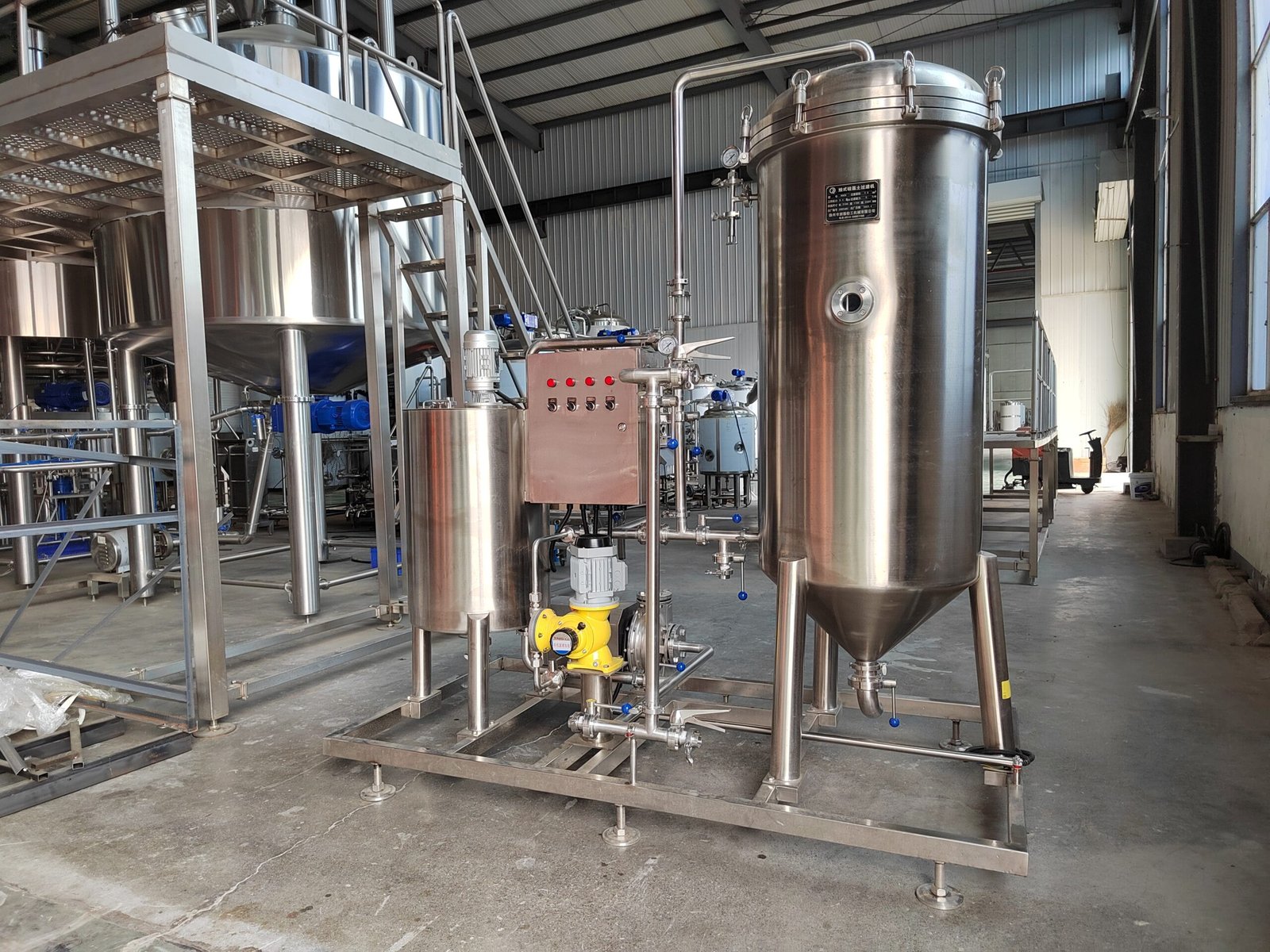
The diatomaceous earth filter is one of the most widely used systems in beer filtration. It uses a layer of diatomaceous earth powder to trap fine particles and yeast.
Advantages of DE Filter
- High filtration precision
- Produces bright and clear beer
- Proven solution for many breweries
- Suitable for consistent production
Limitations
- Requires handling of DE powder
- Additional operating cost for filter aid
- Cleaning and waste disposal required
Application
The DE filter is ideal for breweries producing:
- Lager and pilsner
- Clear beer styles
- Medium-scale production
2. Beer Centrifuge Separator
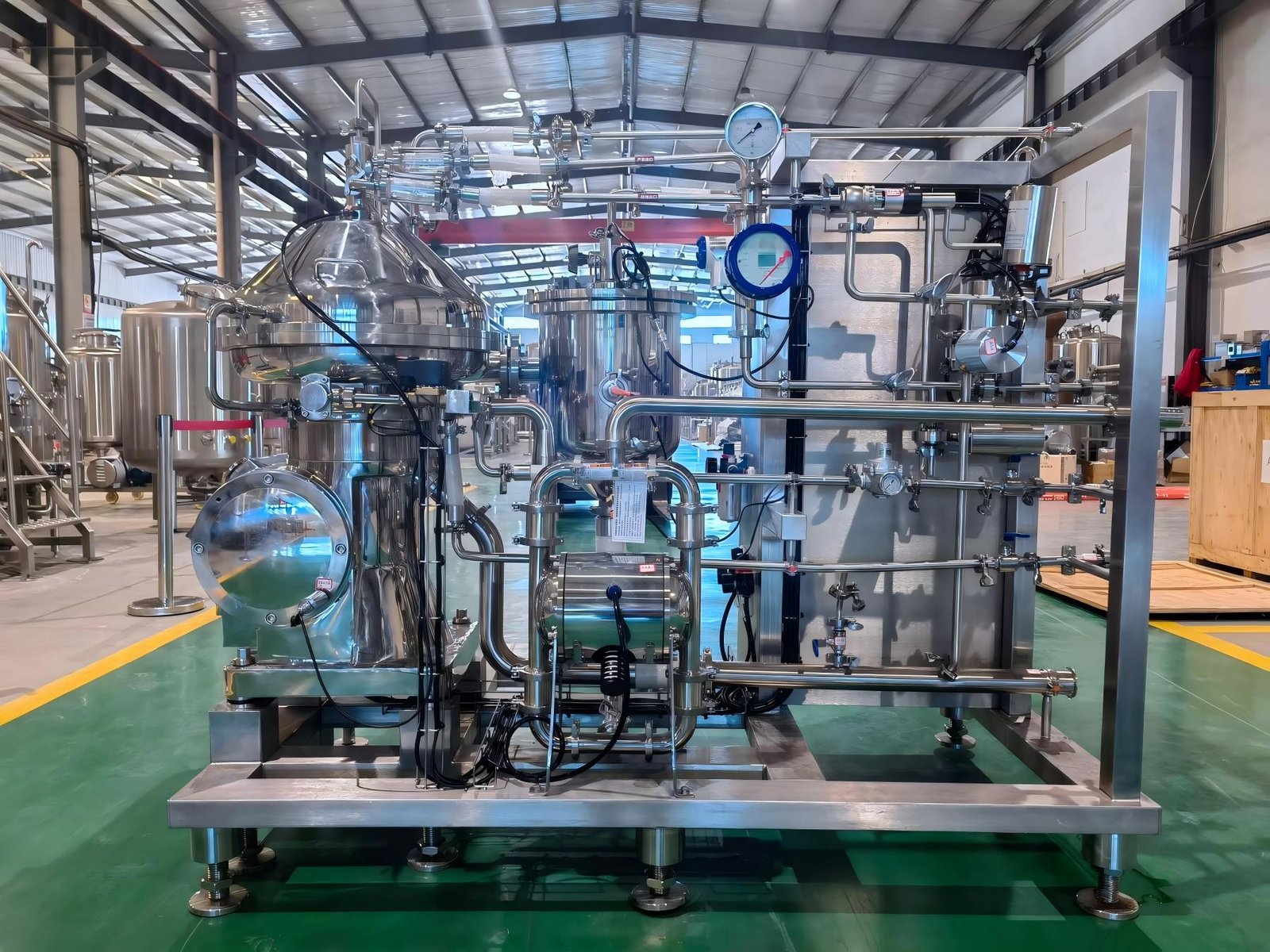
A beer centrifuge is a modern solution that separates yeast and solids using centrifugal force instead of filter media.
Advantages of Beer Centrifuge
- No need for filter aid
- Continuous operation
- High efficiency and automation
- Lower beer loss
- Long-term cost savings
Limitations
- Higher initial investment
- Requires stable operation conditions
- May need additional polishing filtration
Application
Centrifuges are suitable for:
- Growing craft breweries
- Medium to large production capacity
- Breweries focusing on automation and efficiency
DE Filter vs Centrifuge Beer: Key Differences
When comparing DE filter vs centrifuge beer filtration, the main differences are:
- DE filter provides finer polishing
- Centrifuge improves efficiency and reduces labor
- DE filter has higher consumable cost
- Centrifuge has higher upfront investment but lower long-term cost
Many breweries combine both systems to optimize performance.
How to Choose the Best Filtration System for Craft Brewery
When selecting the best beer filtration equipment, consider the following factors:
1. Production Capacity
- Small brewery (<1000L/day): bag filter or small DE filter
- Medium brewery (1000–5000L/day): DE filter or centrifuge
- Large craft brewery (>5000L/day): centrifuge preferred
2. Beer Style
- Hazy or unfiltered beer: minimal filtration
- Clear beer: DE filter or centrifuge + polishing
3. Budget and Operating Cost
- Bag filter: lowest initial cost
- DE filter: medium cost with consumables
- Centrifuge: high investment, low long-term cost
Common Filtration Solutions for Microbrewery
In real projects, many breweries use combined solutions for Beer Filtration Equipment:
- Centrifuge + bag filter for polishing
- DE filter + bag filter for multi-stage filtration
This approach improves efficiency while maintaining beer quality.
At TIANTAI, we provide a full range of beer filtration equipment, including DE filters, bag filters, and beer centrifuge systems. If you are planning a new brewery or upgrading your filtration system, feel free to contact us. We can help you choose the most suitable solution based on your production needs.
Edit by Jane
E: gbrewing@cnbrewery.com