
Usually some customers worry about the glycol consumption, especially the glycol water tank is very big and glycol cost is high. Then how do you think of it?
Our standard configuration will supply 2-3 times bigger glycol water tank with second generation chiller for the cooling system. For example 10bbl beer brewing system, we supply 20bbl glycol water tank. Then some customers will worry about the glycol consumtion.
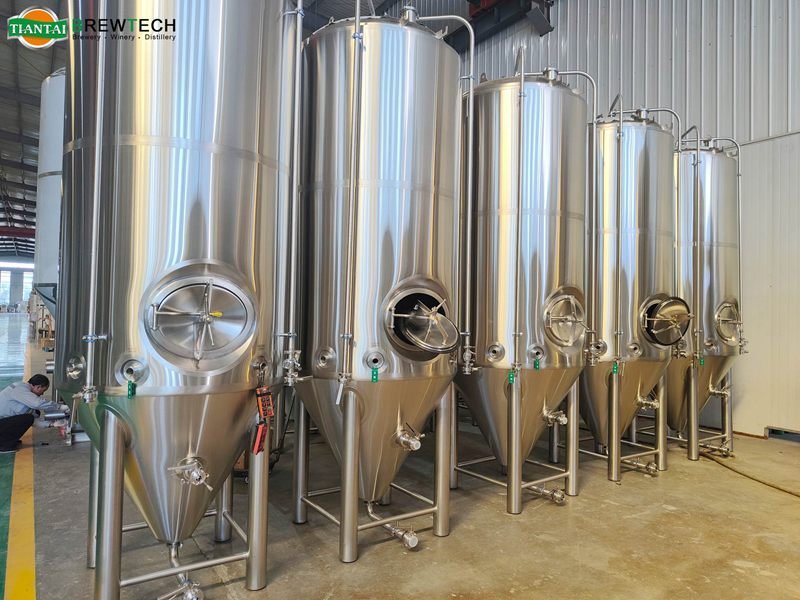
The glycol water is mixture glycol with city water, the ratio glycol:water 1:3 or 1:4 is OK. That means we only need 4bbl or 5 bbl glycol the cooling system will have good working effience.(Though there may have some change base on local enviroment, the consumption will not have big change). Further the glycol water tank is well closed and glycol will not volatile. It can recirculation use for many years. In the later period, we just need to supplement and consumption is very few. (In the initial period, we may need much glycol to fill the tanks). So we think you do not worry about the glycol consumption.
Do you have other ideas?
Abby
Sales Manager in Tiantai Company
Email: gbrew@cnbrewery.com