
In the beer brewing industry, achieving the right clarity and flavor profile is essential. A crucial tool for brewers aiming to produce high-quality, visually appealing, and stable beer is the filter press. This equipment plays a pivotal role in removing suspended solids from the beer, ensuring clarity, consistency, and prolonged shelf life. Let’s dive into the application of filter press technology in beer brewing and explore its significance in the brewing process.
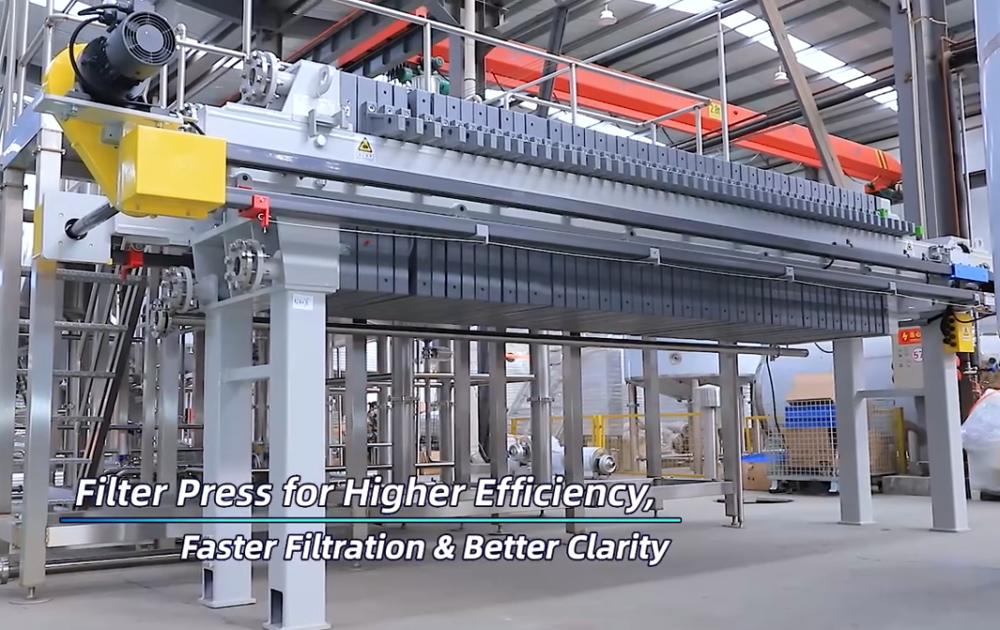
What is a Filter Press?
A filter press is a device designed for solid-liquid separation. It works by forcing liquid through a filter medium, trapping solid particles, and allowing clear liquid to pass through. Filter presses are widely used across different industries, including wastewater treatment, chemical manufacturing, and food processing. In beer brewing, this equipment has proven to be indispensable for achieving clear and high-quality beer.
Importance of Filtration in Beer Brewing
Filtration is essential for removing yeast cells, protein clumps, hop residues, and other unwanted particles from the beer. While these solids are part of the brewing process, their presence in the finished product can lead to hazy appearances, off-flavors, and reduced shelf stability. The use of a filter press addresses these issues, providing brewers with several significant benefits.
Applications of Filter Press in Beer Brewing
Clarifying Wort after Mashing
The brewing process begins with mashing, where crushed grains are mixed with hot water to extract fermentable sugars, proteins, and other compounds. The resulting mixture, known as wort, contains a significant amount of solid grain particles. During wort clarification, brewers aim to separate these solid particles from the liquid wort. Although traditional lautering methods are used in this step, a filter press can provide more precise and efficient clarification.
Polishing Beer after Fermentation
Once fermentation is complete, the beer contains residual yeast cells and proteins that can contribute to haze and affect the final product’s quality. Polishing refers to the process of filtering the beer to achieve a clear, polished appearance. A filter press is ideal for this task, as it can effectively remove small particles, resulting in a brilliantly clear beer.
By using a filter press, breweries can achieve consistent clarity across batches, ensuring that every pint poured looks clean and professional.
Removing Hop Residue in Dry-Hopped Beers
Dry hopping is a popular technique in modern beer brewing, particularly for producing India Pale Ales (IPAs) and other hop-forward styles. However, dry hopping can leave behind hop particles that create unwanted bitterness and cloudiness in the final beer. A filter press provides a solution by efficiently removing these hop residues while retaining the desired hop aromas and flavors.
Yeast Separation and Recovery
In many breweries, yeast is harvested and reused for multiple fermentations. However, effective separation of yeast from the beer is essential to maintain yeast health and performance. A filter press enables brewers to achieve efficient yeast separation, ensuring that only viable yeast cells are recovered while unwanted solids are removed. This not only improves yeast management but also reduces waste and costs for the brewery.
Removing Proteins and Polysaccharides
Proteins and polysaccharides can cause haze formation and affect the stability of beer. These compounds may precipitate during cooling and fermentation, leading to cloudiness in the final product. A filter press, with its specialized filter plates and media, can efficiently remove these unwanted substances, resulting in a more stable and visually appealing beer.
Advantages of Using a Filter Press in Beer Brewing
Improved Beer Clarity and Appearance
A filter press ensures that beer is free of suspended solids, leading to a clear and visually appealing final product. This clarity not only enhances the beer’s appearance but also reflects a high level of craftsmanship and quality control.
Enhanced Flavor Stability
Filtration plays a vital role in preserving the flavor profile of the beer. By removing unwanted particles and microbial contaminants, a filter press helps maintain the beer’s original flavor and aroma, reducing the risk of off-flavors developing over time.
Extended Shelf Life
Unwanted particles in beer can continue to react and spoil the product, leading to reduced shelf life. A filter press effectively removes these particles, resulting in a more stable product with an extended shelf life. This is particularly important for breweries that distribute their products over long distances.
Increased Efficiency and Productivity
Modern filter presses are designed for high efficiency, allowing breweries to filter large volumes of beer quickly and effectively. This increased efficiency translates to higher productivity and reduced downtime, helping breweries meet production demands and maintain consistent quality.
Consistency Across Batches
By removing unwanted solids uniformly, a filter press enables brewers to achieve consistency in every batch. This consistency is essential for maintaining a brewery’s reputation and customer satisfaction.
Types of Filter Presses Used in Beer Brewing
Plate and Frame Filter Press
This type consists of alternating plates and frames, with a filter medium placed between each pair. Plate and frame filter presses are commonly used for filtering beer after fermentation and are known for their precise filtration capabilities.
Membrane Filter Press
Membrane filter presses use flexible membranes that expand and squeeze out additional liquid from the solids. This type of filter press is highly efficient and is typically used in large-scale brewing operations that require high filtration throughput.
Recessed Plate Filter Press
A recessed plate filter press features plates with recessed areas, allowing for higher-pressure filtration. This type is ideal for separating fine particles and achieving clearer beer.
Key Considerations for Using a Filter Press in Brewing
Selecting the Right Filter Medium
The choice of filter medium depends on the specific beer style and the desired level of clarity. Common filter media include diatomaceous earth, cellulose, and polymer-based materials. Brewers should select a medium that suits their filtration goals while preserving the beer’s flavors and aromas.
Adjusting Filtration Pressure
The pressure applied during filtration affects the efficiency and clarity of the process. Brewers must carefully monitor and adjust the filtration pressure to achieve the desired results without damaging the beer’s delicate components.
Cleaning and Maintenance
Proper cleaning and maintenance are crucial to ensure the longevity and efficiency of the filter press. Breweries should establish regular cleaning protocols and use appropriate cleaning agents to prevent residue buildup and contamination.
Challenges in Using a Filter Press for Beer Brewing
Initial Investment Cost
Filter presses can be a significant investment for small breweries. However, the long-term benefits, including improved product quality and reduced spoilage, often outweigh the initial costs.
Training and Operation
Operating a filter press requires trained personnel to handle the equipment safely and efficiently. Breweries should invest in training to ensure their staff can operate and maintain the filter press effectively.
Risk of Over-Filtration
Over-filtration can strip beer of its essential flavors and aromas. Brewers must carefully balance the filtration process to achieve the desired clarity while preserving the beer’s unique characteristics.
In the evolving landscape of beer brewing, achieving clarity, consistency, and stability is more crucial than ever. A filter press is an invaluable tool that enables brewers to remove unwanted particles, improve product quality, and enhance the overall brewing process.
From clarifying wort to polishing finished beer, filter presses play a vital role at every stage of the brewing process. By investing in a high-quality filter press, breweries can achieve better efficiency, consistency, and customer satisfaction.
For more information on filter press solutions and other brewing equipment, contact Tiantai today to explore our range of products designed to meet the needs of every brewery.
👤 Cassie
📧 tiantaibrewery@cnbrewery.com