
A pilot brewing system is a compact, small-batch brewhouse designed for testing and refining beer recipes before scaling them to full commercial production. Although smaller in volume, it follows the same core brewing stages as a production system — mashing, lautering, boiling, whirlpooling, and fermentation.
Because the workflow mirrors that of a large-scale brewhouse, pilot results can be accurately scaled up, giving brewers confidence when moving from trial batches to market-ready beer.
Far from being a luxury, a pilot system is a practical and strategic investment. It minimizes production risk, enhances consistency, accelerates innovation, and supports long-term brand growth.
Whether you are launching a new craft brewery or expanding an established operation, a pilot brewing system strengthens quality control, creativity, and operational efficiency.
100L Pilot Brewing System Overview
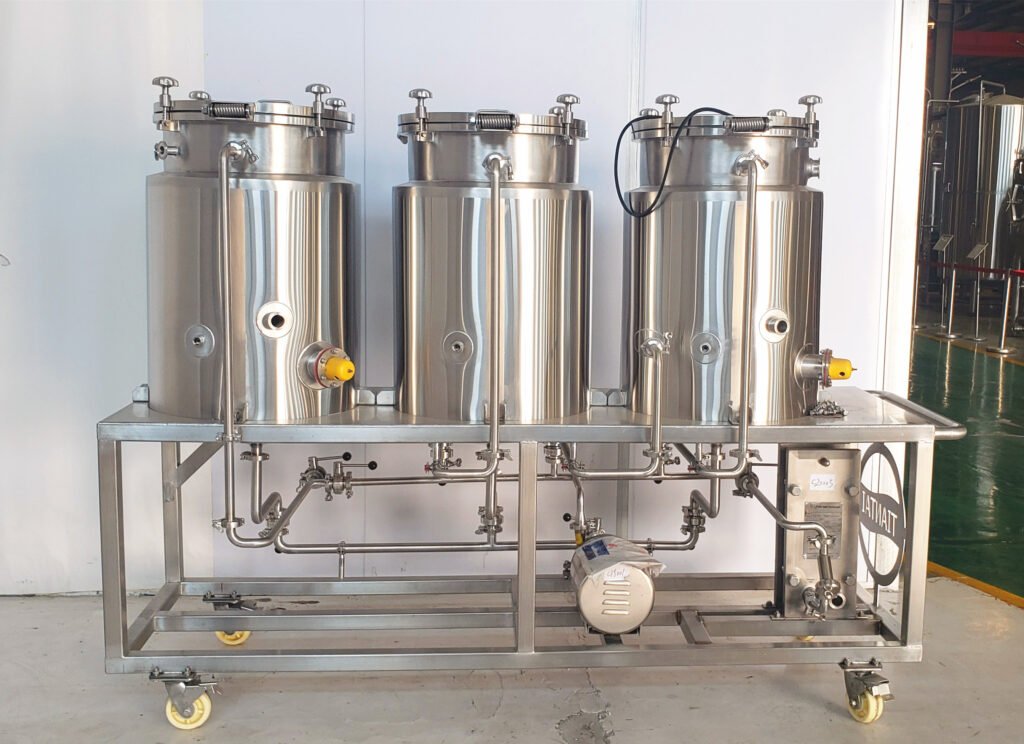
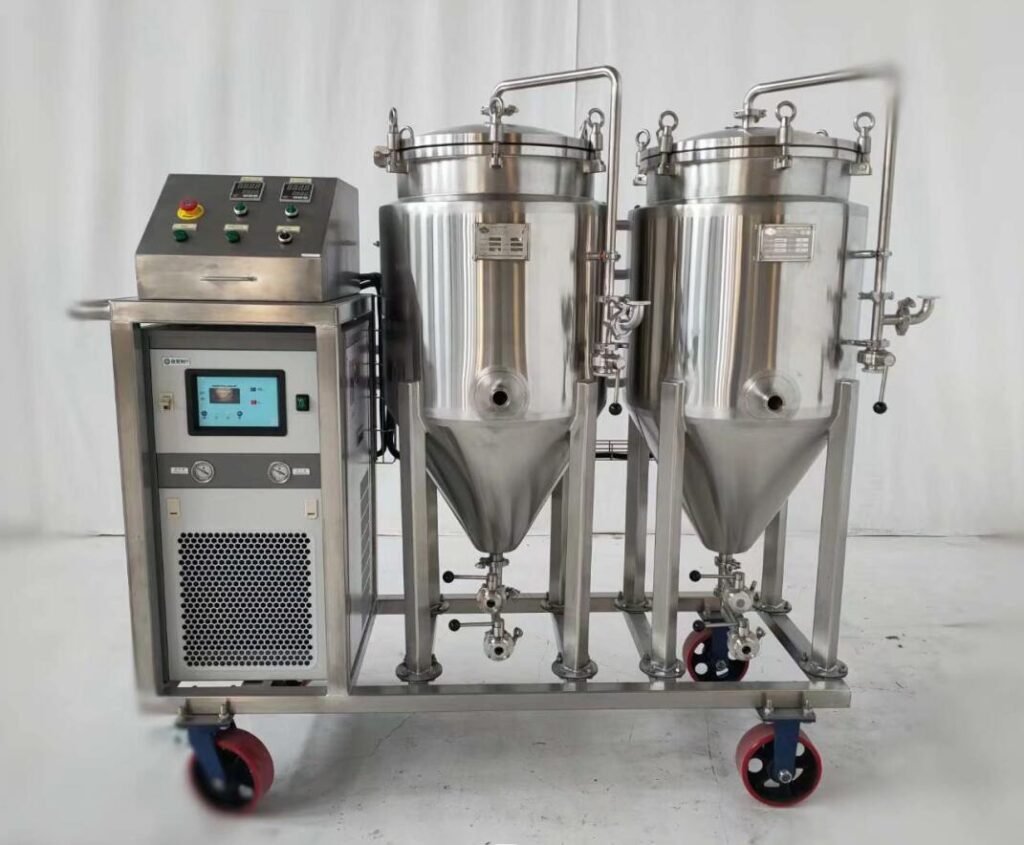
This featured system is a 100L pilot brewery designed for flexibility and mobility.
Brewhouse configuration includes:
-
MLT (Mash/Lauter Tun)
-
KWT (Kettle/Whirlpool Tank)
-
HLT (Hot Liquor Tank)
-
Plate heat exchanger
-
Control cabinet
-
All components mounted on a portable cart
Fermentation setup includes:
-
2 × 100L fermentation tanks
-
Dedicated glycol cooling system
-
Mounted on a separate portable cart
This modular design makes the system compact, movable, and ideal for R&D environments.
Key Advantages of a Pilot Brewing System
1. Develop New Recipes with Confidence
Creating a new beer always involves uncertainty. Testing directly on a production brewhouse can lead to wasted ingredients, downtime, and financial loss.
With a pilot system, brewers can:
-
Trial new ingredients and formulations
-
Adjust hop additions, malt profiles, and yeast selection
-
Refine aroma, flavor balance, and mouthfeel
All experimentation happens on a manageable scale, protecting production capacity while encouraging creativity.
2. Improve Consistency and Repeatability
Customers expect reliable flavor and quality in every batch. Even minor process changes can affect the final product.
A pilot system allows breweries to:
-
Validate recipes before scaling
-
Test process modifications safely
-
Standardize procedures for consistent results
This step is especially critical when transitioning from small batches to commercial output.
3. Strengthen Quality Control and Process Optimization
Modern brewing depends on precise data rather than intuition. Pilot systems, combined with laboratory tools, allow brewers to monitor and optimize key performance indicators such as:
-
Original and final gravity
-
Fermentation behavior
-
pH levels and clarity
-
Alcohol content and product stability
Better monitoring leads to improved efficiency, fewer defects, and higher overall product quality.
4. Accelerate Innovation and Market Responsiveness
Seasonal releases, limited editions, and experimental beers are powerful ways to engage customers. Breweries equipped with pilot systems can respond quickly to emerging trends and consumer feedback.
Benefits include:
-
Shorter product development timelines
-
More confident launches
-
Greater flexibility in portfolio expansion
-
Stronger brand positioning in competitive markets
5. Support Training and Skill Development
Pilot systems also serve as excellent training platforms. New brewers and operators can learn process control, recipe formulation, and troubleshooting techniques in a low-risk environment. This hands-on experience builds confidence and technical expertise without jeopardizing large-scale production.
Invest in Precision, Creativity, and Growth
A pilot brewing system is more than a testing tool — it is an engine for innovation, quality assurance, and strategic expansion.
Tiantai Brewery Equipment specializes in complete turnkey brewing solutions, from pilot systems to full-scale commercial breweries.
If you are considering adding a pilot system to your brewery, please contact Derrick to receive a customized proposal tailored to your production goals.
Abby Wang
Sales Manager
gbrew@cnbrewery.com
Tiantai Brewery Equipment