
In the process of red wine brewing, the choice of wine fermentation tank not only affects the flavor of the wine, but also directly affects the process efficiency and winery style. Stainless steel wine fermentation tanks and oak barrel fermentation tanks are two mainstream equipment, each with its own unique advantages. So, for wineries or wine lovers, which one is more suitable for you? Here we are happy to discuss their characteristics and applications with you.
1. Stainless steel wine fermentation tank
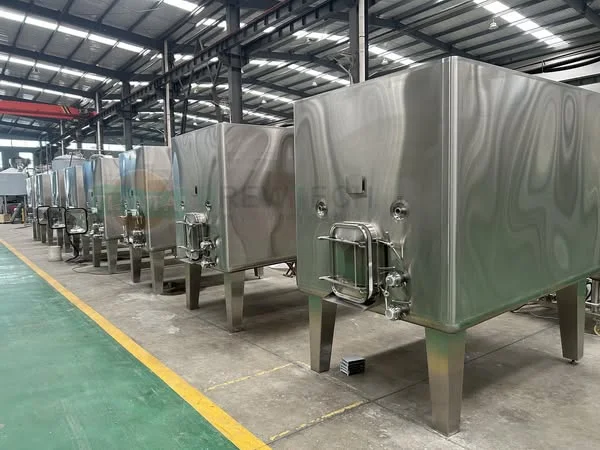
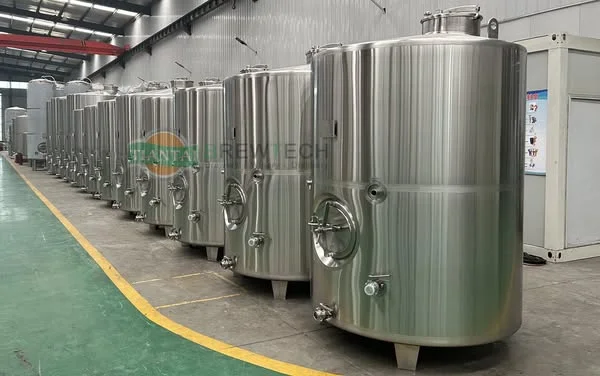
Stainless steel wine fermentation tanks are widely used in various wineries, especially in modern and industrial production, because of their advantages such as cleanliness, corrosion resistance, easy cleaning, and precise temperature control.
Main advantages:
**Precise temperature control system: Tiantai stainless steel wine fermentation tanks are equipped with jacket cooling structure and intelligent temperature control instrument, which are suitable for temperature-sensitive grape varieties.
**Hygiene and safety: The smooth inner wall surface prevents bacterial growth, and cleaning and disinfection are more convenient and quick.
**Highly customized: Cone bottom structure, sampling valve, temperature control probe, manhole and other functional components can be configured according to customer needs.
**Flavor retention: Stainless steel material will not affect the wine, and can fully retain the fruity aroma and fresh taste of the grapes themselves.
Applicable scenarios:
**White wine and young red wine that focus on fruity expression
**Medium and large wineries that require standardized and mass production
**Emerging wine making projects with high requirements for hygiene control
2. Oak barrel wine fermentation tank
Oak barrel wine fermentation tank are commonly found in traditional wineries or small batches of high-end wines. Their natural micro-oxidation environment and wood flavor add layers and complexity to red wine.
Main features:
**Flavor enhancement: Oak can release complex aromas such as vanilla, spices, and baking, while providing a soft tannin structure during fermentation.
**Natural micro-oxidation: helps the wine body to be round and mature, suitable for pre-fermentation treatment of aged red wine.
**Craftsmanship: Each barrel fermentation is unique, suitable for boutique wineries pursuing differentiated styles.
Notes:
**Oak barrels need to be cleaned and maintained regularly to prevent contamination and odor
**Temperature control is difficult and requires manual management or auxiliary temperature control system
Applicable scenarios:
**Boutique wineries that pursue traditional flavors and aging characteristics
**Producing high-end limited edition red wines
**Small-scale wine making experiments or wine culture experience projects
3. How to choose a wine fermentation tank that suits you?
| Compare Projects | Stainless steel fermentation tank | Oak barrel fermentation tank |
| Temperature control capability | Precise temperature control, automatic adjustment | Temperature control depends on the environment or auxiliary system |
| Cleaning and maintenance | Easy to clean, high hygiene | Cleaning is complicated and requires manual processing |
| Flavor influence | Neutral material, no flavor contribution | Release woody aroma and add complexity |
| Cost budget | Moderate initial cost and simple maintenance | High initial cost and requires regular replacement |
| Scope of application | Industrial production, young wines | High-end red wine, small batch customized wine |
The final choice should be based on your winery positioning, target market, wine making philosophy and budget considerations. If you have any questions, please feel free to contact us. Tiantai will provide you with one-on-one professional advice and equipment configuration solutions.
Edited by Cassie
E-mail:tiantaibrewery@cnbrewery.com