
When designing a beer fermentation tank, the position of the manhole—side-mounted or top-mounted—is a key structural detail. It directly affects daily operation, cleaning efficiency, cooling performance, and overall brewery layout.
At Tiantai Beer Equipment Company, we are often asked which manhole option is “better.” In reality, there is no universal standard. Each configuration has its own advantages and limitations, and the best choice depends on tank size, brewery space, and operating habits.
Below is an objective comparison to help brewers and engineers make an informed decision.
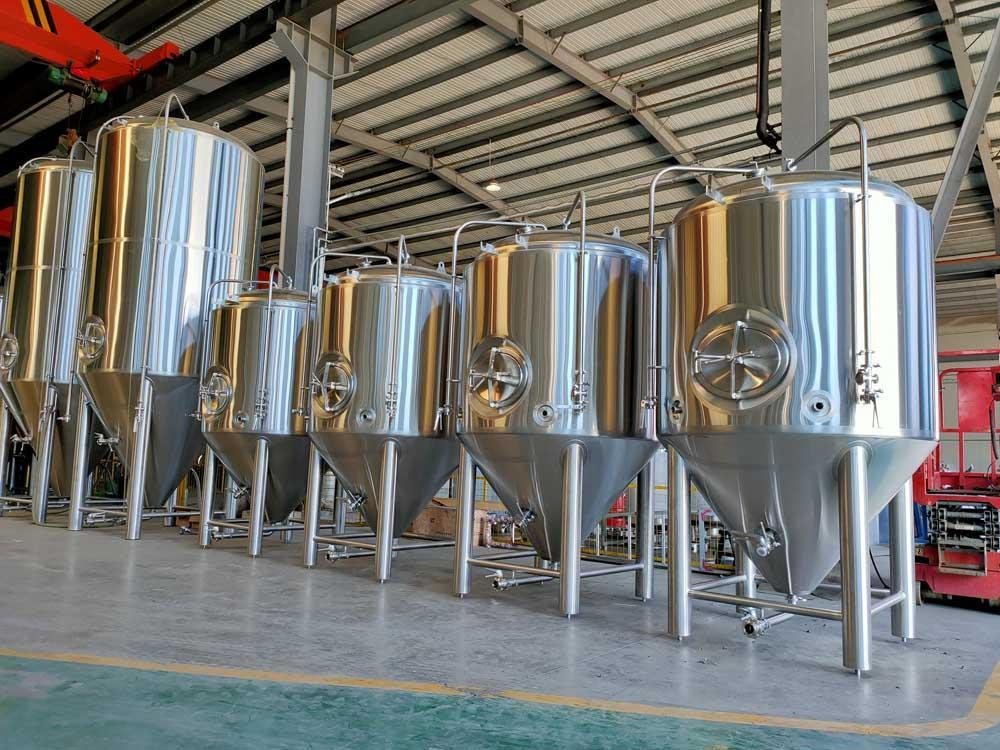
I. Side Manhole on Beer Fermentation Tanks
1. Advantages
Convenient access
A side manhole allows brewers to access the inside of the tank directly from floor level, eliminating the need for ladders or platforms.
Suitable for limited ceiling height
In breweries with restricted headroom, side manholes are often the most practical solution.
Efficient for frequent manual operations
Tasks such as inspection, dry hopping, sampling, or manual cleaning are easier and faster to perform through a side manhole.
2. Considerations
Cooling jacket interruption
The manhole area cannot be covered by cooling jackets, resulting in a localized non-cooled zone.
Greater impact on small tanks
On small-capacity fermentation tanks, the non-cooled area created by a side manhole may represent a relatively large proportion of the tank surface, potentially affecting temperature control.
More complex tank fabrication
Openings on the straight wall increase manufacturing complexity and require careful sanitary design to ensure structural strength and hygienic performance.
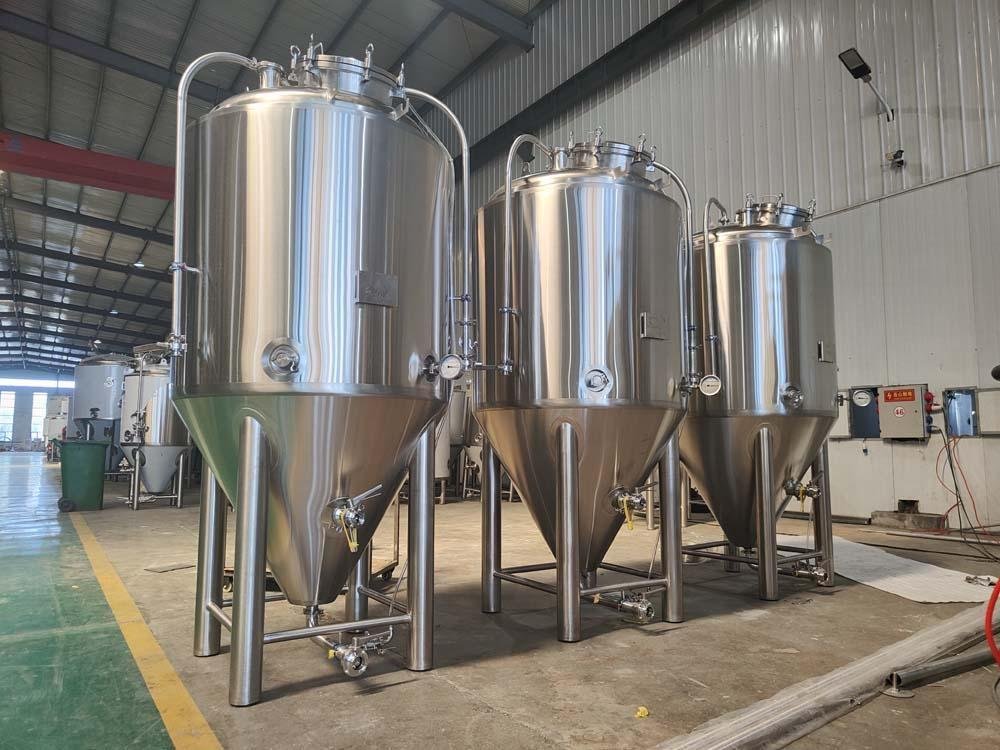
II. Top Manhole on Beer Fermentation Tanks
1. Advantages
No impact on straight wall cooling area
Cooling jackets on the straight wall can remain continuous and uniform, improving overall temperature control.
Simpler internal geometry
Without side openings, the tank interior is smoother, which can be beneficial for cleaning efficiency and long-term hygiene.
Well suited for small-capacity tanks
For tanks with limited diameter and straight wall height, a top manhole is often easier to integrate from both a structural and manufacturing perspective.
2. Considerations
Access requires height
Opening and accessing a top manhole typically requires a ladder or working platform.
Less convenient for frequent access
Compared with side manholes, repeated manual access may be less efficient during daily operations.
III. Tank Size and Manhole Selection
1. Small Fermentation Tanks (approximately 50L–400L)
-
Limited tank dimensions can restrict the feasibility of a side manhole
-
Cooling jacket coverage is more critical
-
Top manholes are commonly selected due to structural simplicity and better cooling efficiency
IV. Medium and Large Fermentation Tanks
-
Both side and top manholes are widely used
-
The final decision usually depends on:
-
Brewery height
-
Operational workflow
-
Safety and access preferences
IV. Choosing Based on Real Brewing Conditions
Manhole selection should be evaluated based on real operational needs, including:
-
Tank volume and diameter
-
Available brewery height
-
Cooling performance requirements
-
Cleaning method (CIP only or manual access)
-
Brewer safety and daily operating habits
There is no single “correct” choice—only the most suitable solution for a specific project.
-
-
V. Tiantai’s Approach
At Tiantai Beer Equipment Company, we provide both side manhole and top manhole designs, customized according to:
Brewery layout
Production scale
Brewing process requirements
Our goal is to ensure that every fermentation tank is practical, hygienic, and efficient, based on real-world use rather than a fixed standard design.
If you are planning a new brewery, expanding capacity, or selecting fermentation tanks, we are happy to provide technical advice, drawings, and layout support to help you make the right decision.
Abby Wang
Sales Manager
Email: gbrew@cnbrewery.com