
When planning to set up a brewery, there are many important factors to consider, such as equipment configuration, brewing processes, and target market. One common question is: Is it necessary to include a Beer Filter System?
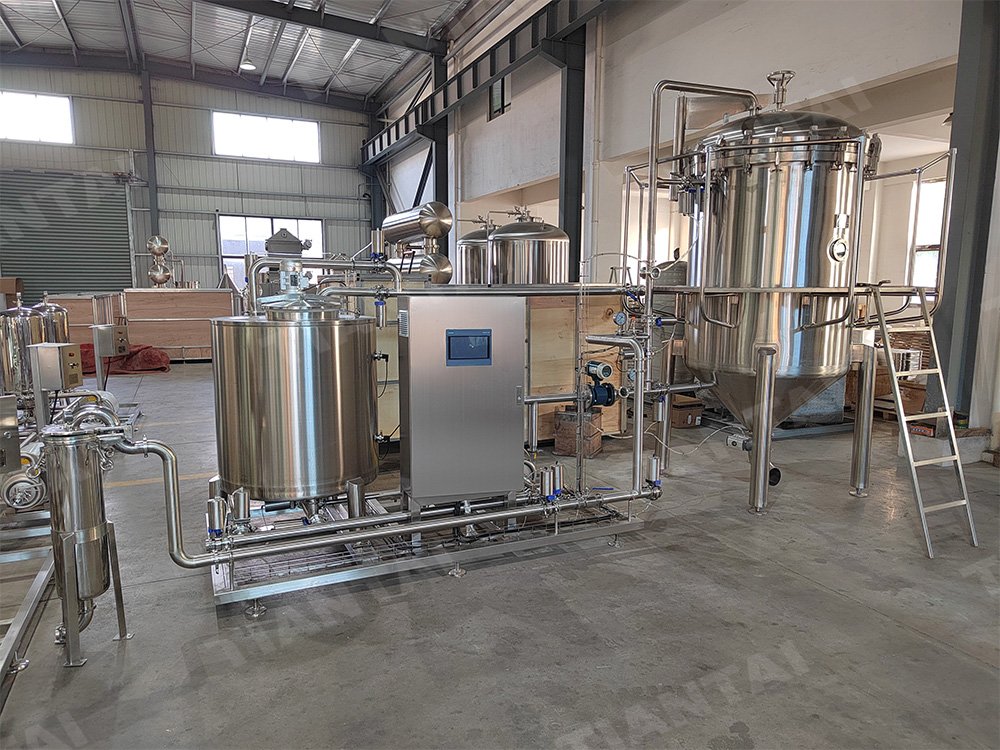
The answer is not absolute. It depends on several factors, including the type of beer you produce, your desired clarity, and your overall production goals.
1. Beer Style Matters
Different beer styles have different Beer Filter needs:
- Typically filtered beers: Lagers, pilsners, and some pale ales are often filtered to achieve a bright appearance and clean taste.
- Typically unfiltered beers: Wheat beers, many IPAs, and Belgian-style beers are often left unfiltered to maintain haze and enhance flavor complexity.
Your product style will strongly influence whether filtration is necessary.
2. Desired Clarity
One of the main purposes of filtration is to remove yeast, proteins, and other particles that cause haze.
If your target market prefers crystal-clear beer, filtration can help meet those expectations. On the other hand, if hazy beer is acceptable or even desirable, filtration may not be required.
3. Production Stability and Shelf Life
Filtration offers several operational advantages:
- Improves product stability by reducing residual yeast
- Extends shelf life, especially for distribution
- Enhances batch consistency, ensuring uniform quality
These benefits are particularly important for breweries planning to scale up or distribute their products.
4. Equipment Investment and Operating Costs
Adding a beer filter involves additional costs, including:
- Initial equipment investment
- Ongoing filter media costs (e.g., diatomaceous earth or membranes)
- Maintenance and labor
For small or start-up breweries, this investment should be carefully evaluated.
5. Alternatives to Filtration
If filtration is not part of your initial plan, there are alternative methods to improve clarity:
- Using fining agents (e.g., isinglass, gelatin, Biofine)
- Extending cold conditioning (cold crashing)
- Optimizing fermentation and sedimentation
These methods can often achieve acceptable clarity without dedicated filtration equipment.
Conclusion
A beer filtration system is not mandatory for every brewery, but it is a valuable tool for achieving specific goals related to clarity, stability, and consistency.
The decision should be based on:
- Beer style
- Market expectations
- Production scale and goals
- Available budget
If you are planning to build a brewery, choosing the right configuration based on your needs will help you maximize efficiency and return on investment.
Feel free to contact Abby at gbrew@cnbrewery.com for further discussion. I would be happy to assist you in designing a practical and efficient brewery system. Cheers! 🍻