
What happens when brewing engineering meets specialty coffee production? The result is a more precise, stable, and expressive flavor development method that helps coffee producers achieve cleaner and more consistent quality.
Tiantai Brewery Equipment is collaborating with innovation-driven coffee producers to develop advanced processing solutions that integrate controlled low-temperature fermentation with microbial management techniques. This approach redefines traditional coffee fermentation by introducing scientific process control.
The system is designed to operate fermentation at approximately 4–5°C, followed by maturation near 0°C. Such low-temperature environments help regulate microbial activity while supporting the formation of desirable flavor compounds such as esters and aldehydes. The result is coffee with enhanced fruity aroma characteristics and reduced acidity, inspired by modern fermentation science used in beverage production.
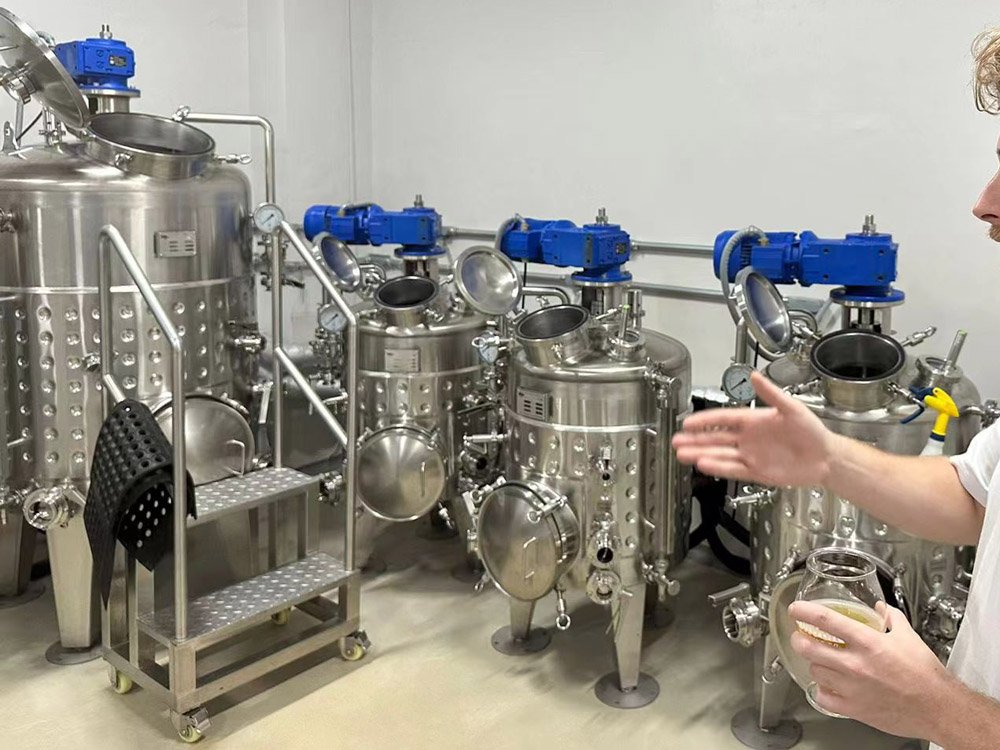
Rethinking Coffee Fermentation
Conventional fermentation methods often depend on natural environmental microbes, which may lead to unstable quality and inconsistent flavor performance.
Cold fermentation provides a more controlled alternative. By managing yeast metabolism under low temperatures, unwanted bacterial growth can be suppressed, helping producers achieve repeatable flavor profiles across batches.
The process is further strengthened through thermal shock pretreatment, which helps sanitize the surface of coffee cherries. Combined with prolonged low-temperature maturation, this method encourages complex aroma formation while maintaining flavor balance.
Coffee Fermentation Processing Workflow: From Cherry to Finished Coffee
The system integrates several key processing stages:
1. Thermal Shock Pretreatment
Coffee cherries are immersed in alternating hot and cold water cycles to reduce surface microorganisms. This step helps establish a clean fermentation environment while maintaining energy efficiency through reusable heating and cooling resources.
2. Depulping and Sorting
A combined depulping and grading unit removes cherry skins and classifies beans by size. Uniform raw material quality is essential for stable fermentation performance.
3. Controlled Cold Fermentation
Sealed fermentation tanks equipped with cooling modules maintain stable temperatures around 4–5°C. Sterilized airflow systems supply oxygen while preventing contamination, supporting yeast activity and flavor formation.
4. Cold Maturation Stage
After fermentation, beans are stored in near-freezing conditions (0 to -1°C). Gentle circulation systems ensure uniform treatment without damaging bean structure, helping aroma compounds diffuse and develop fruit-like sensory characteristics.
5. Washing and Drying
Residual mucilage is removed through a washing process, followed by controlled hot-air drying at approximately 40–45°C. Eco-friendly biomass heating using coffee husks can be used as an energy-saving option.
6. Hulling and Final Processing (Optional)
The parchment layer can be removed to produce green coffee ready for roasting, grinding, or packaging.
Technical Advantages
Stable Temperature Precision
Fermentation and maturation tanks are designed with advanced cooling systems capable of maintaining temperature variations within ±1°C, ensuring consistent microbial performance.
Contamination-Free Environment
Sealed tank structures combined with filtered air supply systems reduce the risk of off-flavor development such as excessive acetic acid formation.
Flexible and Scalable Design
The processing system supports experimental pilot setups as well as expanded commercial production, allowing producers to grow gradually.
Craft Science for Future Coffee Flavor
Modern coffee producers are exploring new flavor possibilities through controlled microbial and process engineering. This cold fermentation technology provides a technical foundation for specialty coffee innovation by combining scientific precision with artisanal quality goals.
If you are planning to explore new fermentation styles or build a specialty micro-processing facility, our customized system can support your production vision from pilot testing to commercial scale.
For customized cold fermentation solutions, please contact our project team to discuss your processing requirements and facility layout.
Project Manager: Abby Wang
Email: gbrew@cnbrewery.com