
Choosing the right beer fermentation tank size is one of the most important decisions when building or expanding a brewery. While many brewers focus on recipes or ingredients, tank sizing directly impacts production efficiency, workflow, and long-term scalability.
A properly selected beer fermentation tank not only ensures smooth fermentation but also helps avoid unnecessary investment and operational limitations.
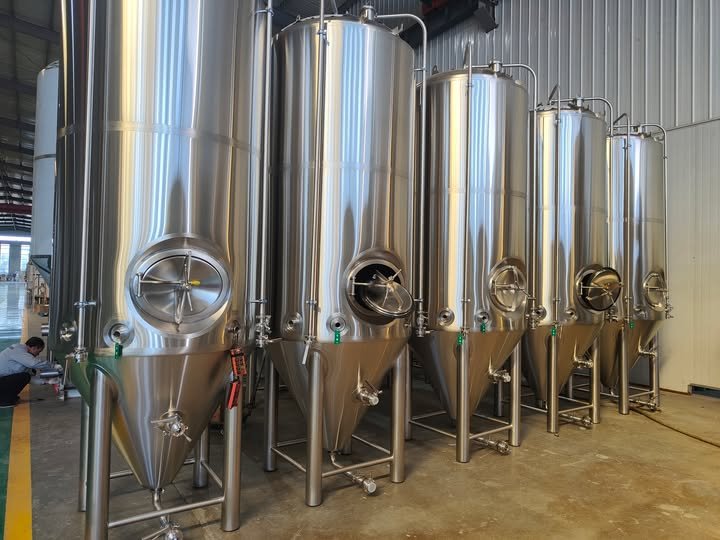
Understanding Beer Fermentation Tank Capacity
When discussing a beer fermentation tank, there are usually two key volumes to consider:
-
Working volume (actual beer volume)
-
Total volume (including headspace for fermentation)
For example, a tank labeled as 1000L may have a total capacity of around 1300L. This extra space is essential to accommodate foam and active fermentation.
Ignoring this difference can lead to overflow issues or reduced batch efficiency.
Matching Tank Size to Your Production Goals
The most practical way to choose a beer fermentation tank is to start from your production target.
Ask yourself:
-
How many batches do you plan to brew per week?
-
What is your expected monthly or annual output?
-
Are you planning to expand in the near future?
Small Craft Breweries
For small breweries or pilot systems:
-
500L – 1000L fermentation tanks are common
-
Suitable for testing recipes and local distribution
Growing Breweries
For expanding operations:
-
2000L – 5000L beer fermentation tank systems
-
Better balance between capacity and flexibility
Commercial Production
For larger breweries:
-
10,000L and above
-
Designed for continuous, high-volume production
Choosing a slightly larger tank than your current needs can help avoid frequent upgrades.
Balancing Brewhouse and Fermentation Capacity
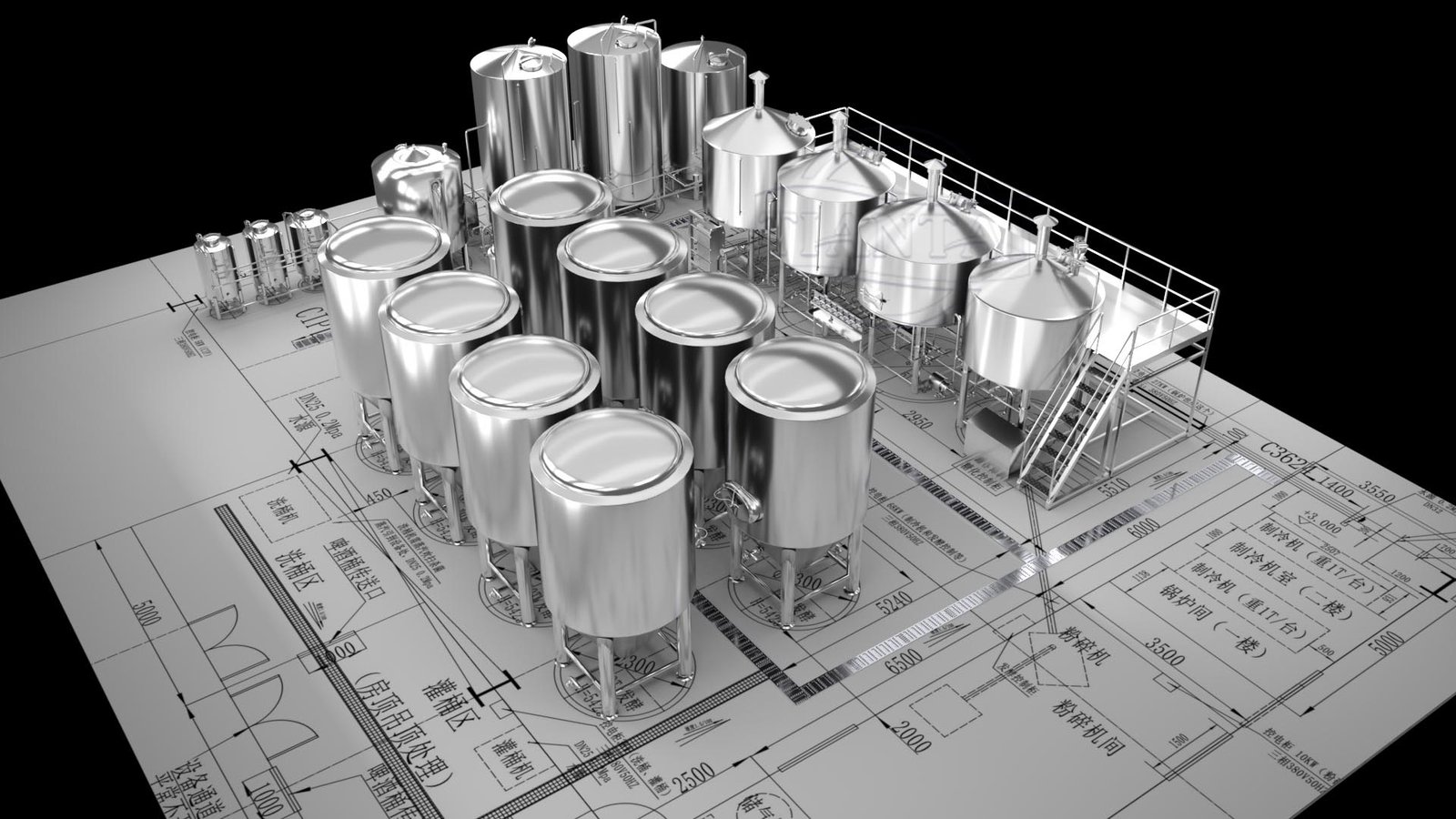
One common mistake is mismatching the brewhouse size with the beer fermentation tank capacity.
A general guideline is:
-
Fermentation capacity should be 2 to 4 times the brewhouse output
This is because fermentation takes longer than brewing. If your fermentation tanks are too small or too few, your brewhouse will sit idle.
For example:
-
1000L brewhouse → 2 to 4 × 1000L fermentation tanks
This ensures continuous production without bottlenecks.
👉 You can also learn more about how tank design affects performance in this guide:
Beer Fermentation Tank Design: Key Features That Matter
Considering Fermentation Time
Different beer styles require different fermentation durations, which directly impacts how many beer fermentation tank units you need.
-
Ales: typically 7–10 days
-
Lagers: 2–4 weeks or longer
If you produce lagers, you will need more fermentation capacity compared to ale-focused breweries.
Longer fermentation means tanks are occupied for extended periods, reducing turnover rate.
Flexibility vs Efficiency
Another key consideration is whether you prefer flexibility or maximum efficiency.
More Smaller Tanks
Advantages:
-
Brew multiple beer styles at the same time
-
Easier to manage experimental batches
Disadvantages:
-
Higher equipment cost
-
More cleaning and maintenance
Fewer Larger Tanks
Advantages:
-
Lower cost per liter
-
Higher efficiency for large batches
Disadvantages:
-
Less flexibility
-
Higher risk if a batch fails
Most breweries choose a combination of tank sizes to balance these factors.
Space and Installation Constraints
Your available space will also influence your beer fermentation tank selection.
Important factors include:
-
Ceiling height
-
Door width for tank delivery
-
Layout for piping and operation
Vertical tanks are common, but their height must match your building conditions. Planning this in advance can avoid costly modifications later.
Planning for Future Expansion
Many breweries underestimate how quickly they will grow. When selecting a beer fermentation tank, it is important to think beyond current demand.
Consider:
-
Leaving space for additional tanks
-
Choosing standardized sizes for easier expansion
-
Ensuring utilities (cooling, glycol system) can support future capacity
At TIANTAI, we often recommend scalable configurations so breweries can expand without replacing existing equipment.
Selecting the right beer fermentation tank size is not just a technical decision—it is a strategic one. The right choice improves efficiency, reduces costs, and supports long-term growth.
By considering production goals, fermentation time, and space constraints, brewers can build a system that works both now and in the future.
To better understand how to optimize your system, you may also find these helpful:
If you are planning a new brewery or upgrading your equipment and need guidance on selecting the right beer fermentation tank, the team at TIANTAI is always available to provide practical advice and tailored solutions based on your production needs.
Edit by Jane
Sales/Project Manager
E: gbrewing@cnbrewery.com