
Yeast separation is an important step in beer finishing. After fermentation is complete, removing excess yeast and suspended solids helps improve beer clarity, stability, and shelf life before packaging.
In modern breweries, yeast separation is usually achieved using centrifugation or filtration technologies. These methods are designed to efficiently remove yeast cells while minimizing beer loss and preserving flavor quality.
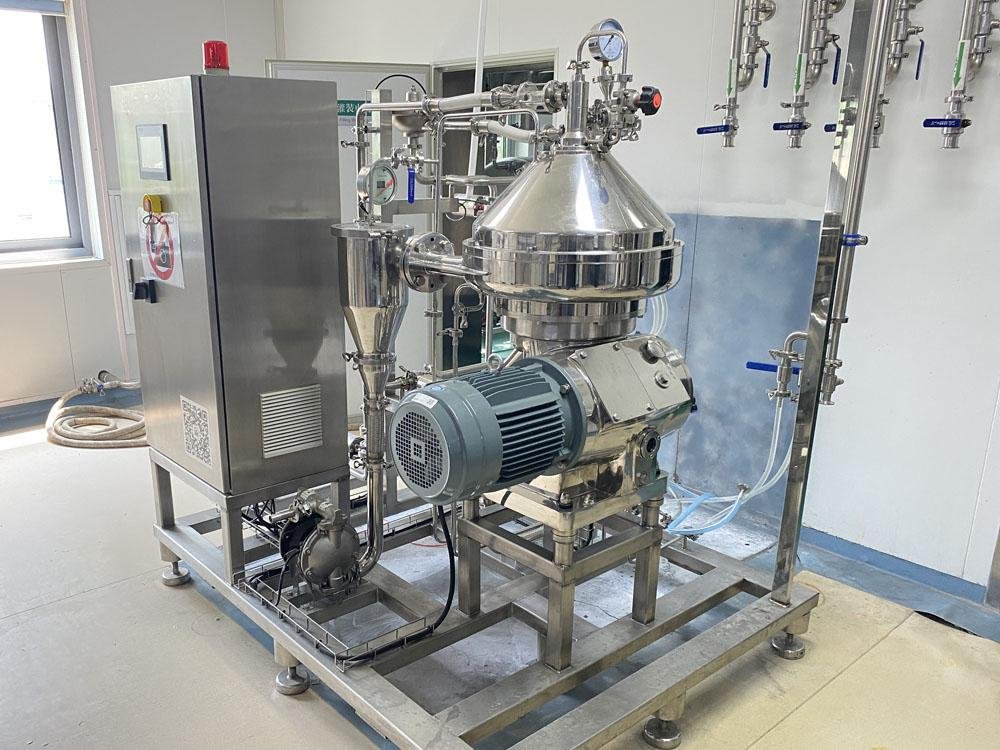
The yeast separator used by Tiantai Brewery Equipment is based on high-speed rotational separation. By utilizing density differences between beer and solid particles, the system quickly isolates yeast from finished beer.
Advantages of Centrifugal Yeast Separation
-
High separation efficiency
-
Faster processing speed
-
Reduced product loss compared with traditional settling methods
-
Stable quality control for large-scale production
Centrifugal separation is widely adopted in industrial breweries where throughput and consistency are critical.
Alternative Yeast Separation Methods
Besides centrifuges, breweries may also use several other separation techniques depending on production scale and product style.
Conical Fermenter Natural Sedimentation
Conical fermenters are commonly used in small and medium-sized breweries. During fermentation, yeast naturally settles at the bottom of the tank and can be discharged through a bottom valve.
Advantages
-
Simple structure and operation
-
Lower equipment investment
-
Suitable for craft and small-batch production
Limitations
-
Requires careful operation to avoid beer loss
-
Separation speed is slower compared with mechanical systems
Filtration Systems
Filtration is often used after primary yeast removal to further improve beer purity.
Common filtration technologies include:
-
Diatomaceous Earth (DE) Filtration – Widely used in larger breweries for residual yeast removal.
-
Membrane Filtration – Provides finer filtration and is suitable for sterile beer production.
-
Crossflow Filtration – A more advanced solution designed for high-volume and continuous operation.
Flotation Separation Technology
Flotation systems use gas injection, such as CO₂ or nitrogen, to push yeast particles upward for removal.
This method offers several benefits:
-
Gentle treatment helps preserve beer aroma and body
-
Lower risk of flavor degradation
-
Reduced beer loss during separation
Flotation is especially popular in breweries that prioritize sensory quality.
Choosing the Right Separation Solution
Selecting an appropriate yeast separation method depends on brewery capacity, product style, and investment budget. Large-scale production typically favors high-efficiency mechanical separation, while craft breweries may prefer gentler or more economical options.
Modern yeast separation technology helps breweries achieve clearer beer, improved stability, and more consistent flavor performance.
If you are planning to optimize your brewery separation process or need equipment recommendations based on your production scale, please contact our team for a customized proposal.
For professional brewing equipment solutions, our engineering team is ready to support your project requirements.
Sales Manager: Abby Wang
Email: gbrew@cnbrewery.com