
Part 1: Does a Craft Brewery Need a Brite Beer Tank (BBT)?
Many brewers planning a craft brewery ask if a Bright Beer Tank is essential. The necessity is tied directly to their production goals and sales strategy.

What is a Brite Beer Tank?
A Bright Beer Tank (BBT) is used for:
– Final clarification and storage
– Carbonation adjustment
– Buffering before bottling, canning, or kegging
It maintains beer clarity, freshness, and stable pressure.
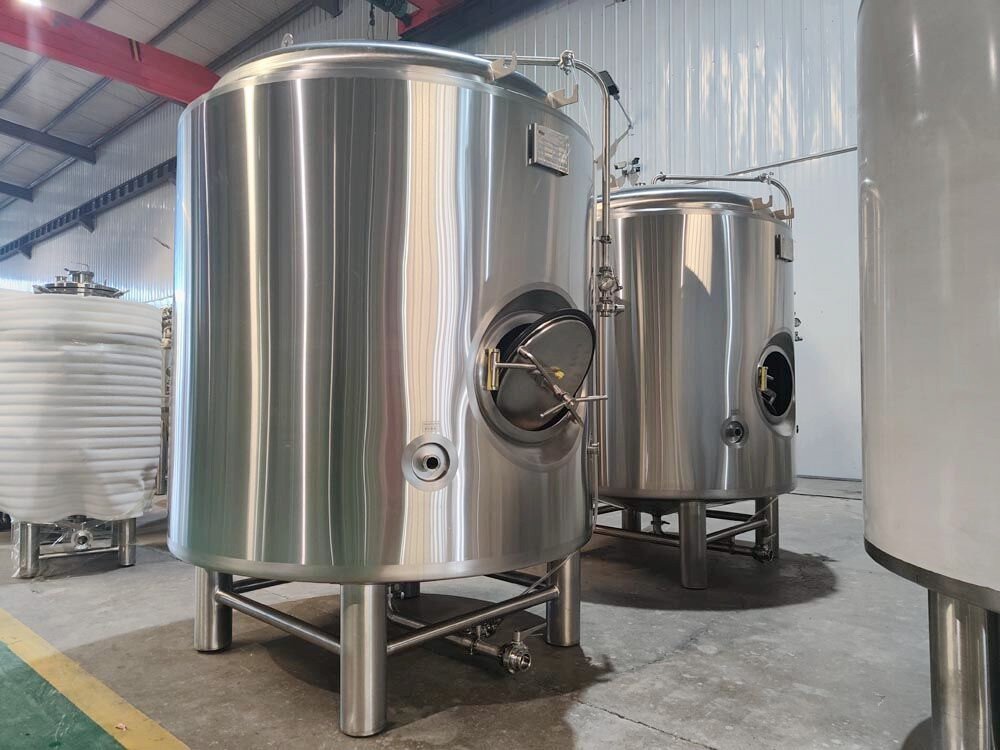
Why Use a Brite Beer Tank?
Improve beer appearance: Further clarifies beer for a bright, clean look.
Unify batches: Ensures consistent taste and carbonation.
Boost production: Frees fermenters faster for the next brew.
Streamline packaging: Provides stable pressure for efficient filling.
When Is a BBT Recommended?
– Bottling, canning, or kegging production
– Serving draft beer at bars or pubs
– Larger scale production or export
– Need for consistent clarity and carbonation
When Can You Brew Without a BBT?
– Direct taproom sales with small batches
– Hazy beer styles (e.g., NEIPA, sours)
– Startups with limited budgets
– No blending needed between batches
In these cases, beer can be served directly from fermenters (Unitanks).
| BBT Recommended | BBT Optional | |
| Sales Model | Bottling, Kegging | Fresh taproom sales |
| Clarity | Important | Less important |
| Scale | Medium to large | Small/startup |
| Budget | Adequate | Limited |
A BBT is not mandatory, but it’s highly valuable for scaling production, packaging, and delivering consistent, high-quality beer. If you are interested in using BBTs, welcome to read following words to learn 2 different BBT types.
Part 2: Difference Between Horizontal BBT and Vertical BBT
1. Introduction
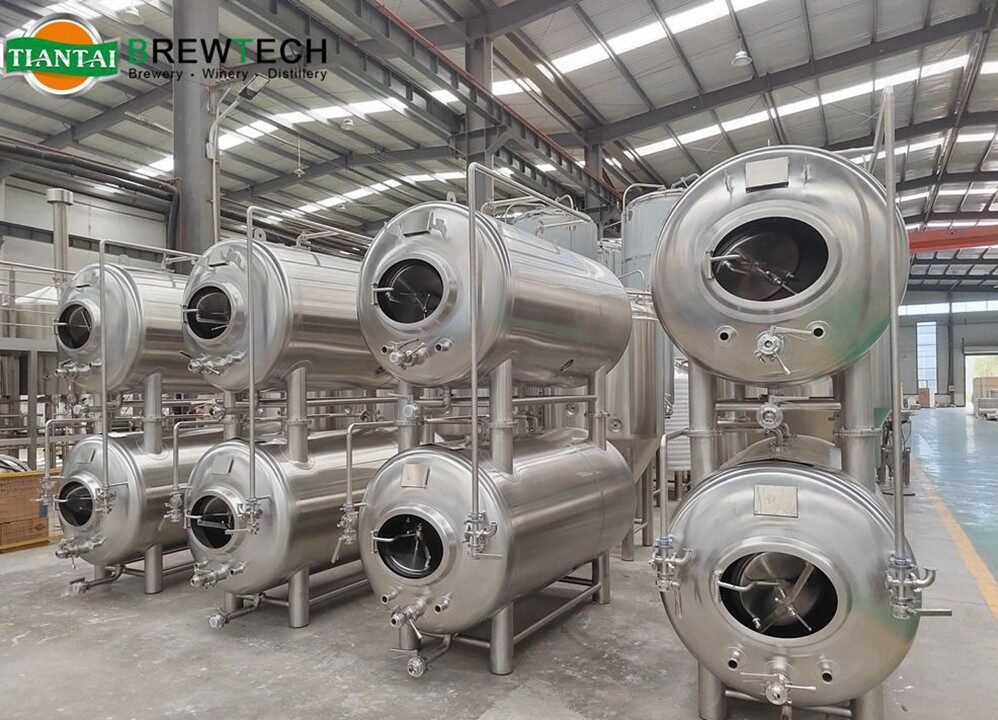
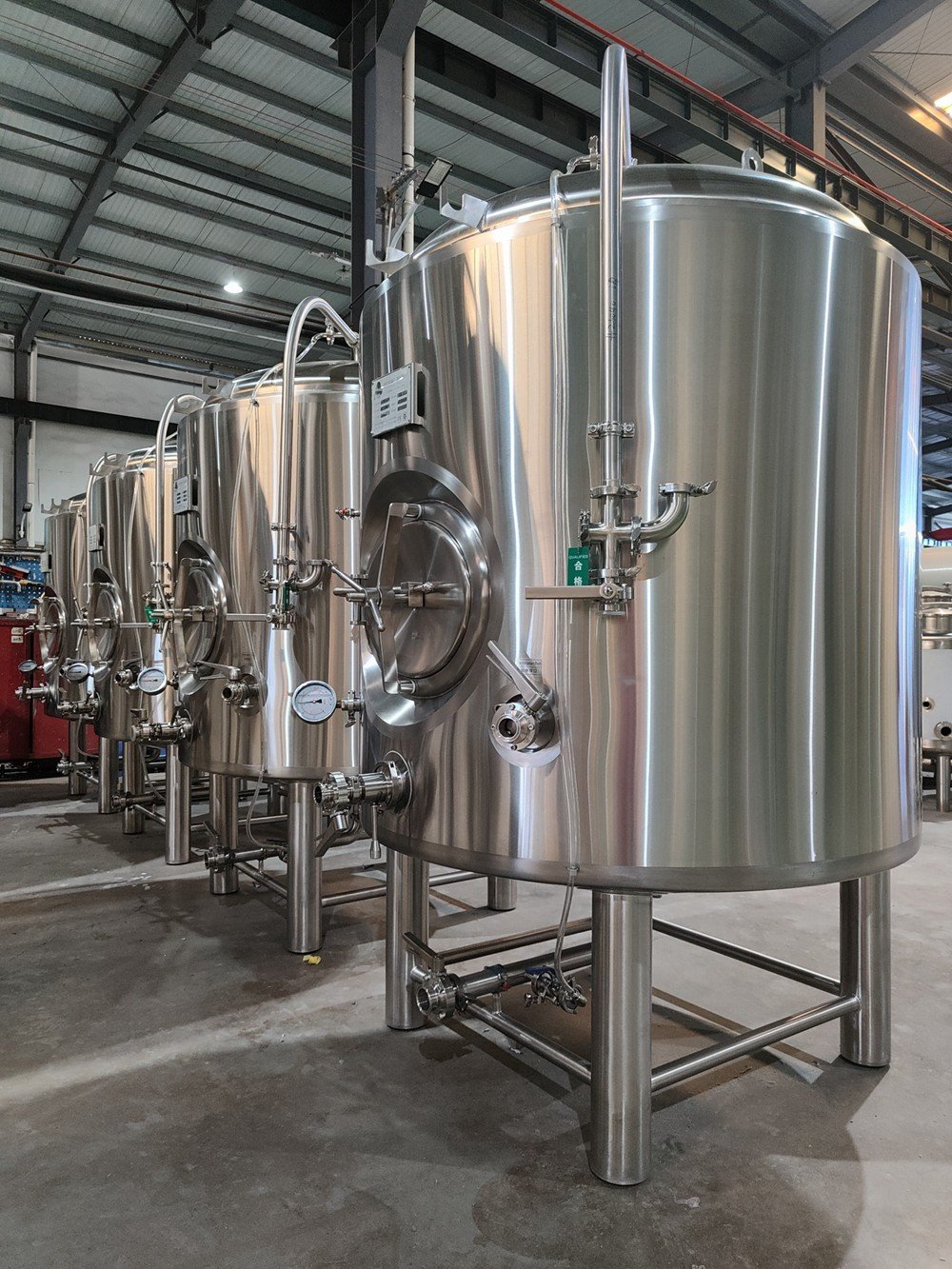
In craft breweries, Bright Beer Tanks (BBTs) are essential for beer maturation, carbonation, and serving preparation. BBTs are generally available in two designs: Vertical and Horizontal. Each design offers specific advantages depending on the brewery’s layout, production process, and serving needs.
2. Vertical Brite Beer Tanks
Design:
Upright cylindrical tanks with a smaller footprint.
Advantages:
– Space-saving: Require less floor area, ideal for breweries with limited space.
– Better sediment separation: Easier to clarify beer as sediment naturally settles at the bottom.
– Integrates well with vertical piping and level sensors/tubes, more accurate Liquid level height measurement
– Easier carbonation control: Vertical shape can support more consistent CO2 distribution
– Improved cooling: Modern vertical BBTs have cooling jackets on both the body and the bottom head for better temperature control.
Disadvantages:
– Requires higher ceilings: May not fit well in low-height areas.
– Relative challenging cleaning access if very tall tanks.
– Not ideal for direct serving unless installed with dedicated tapping lines.
Best for:
– Breweries with limited floor space.
– Standard production cellars.
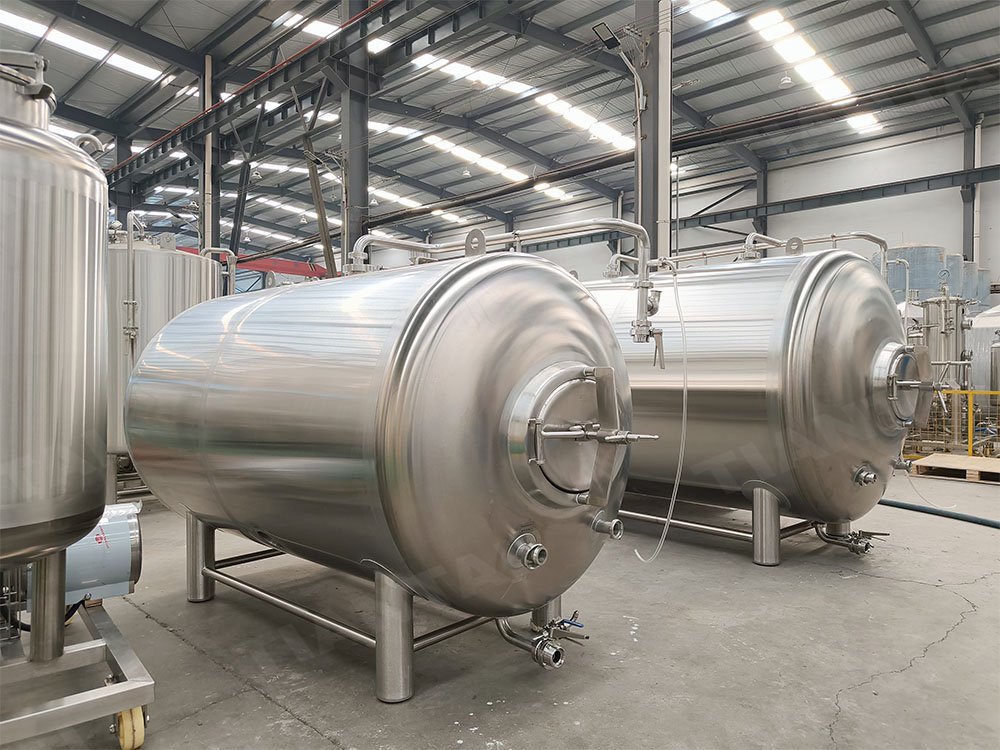
3.Horizontal Brite Beer Tanks
Design:
Longer, lying-down cylindrical tanks installed either on legs or skids.
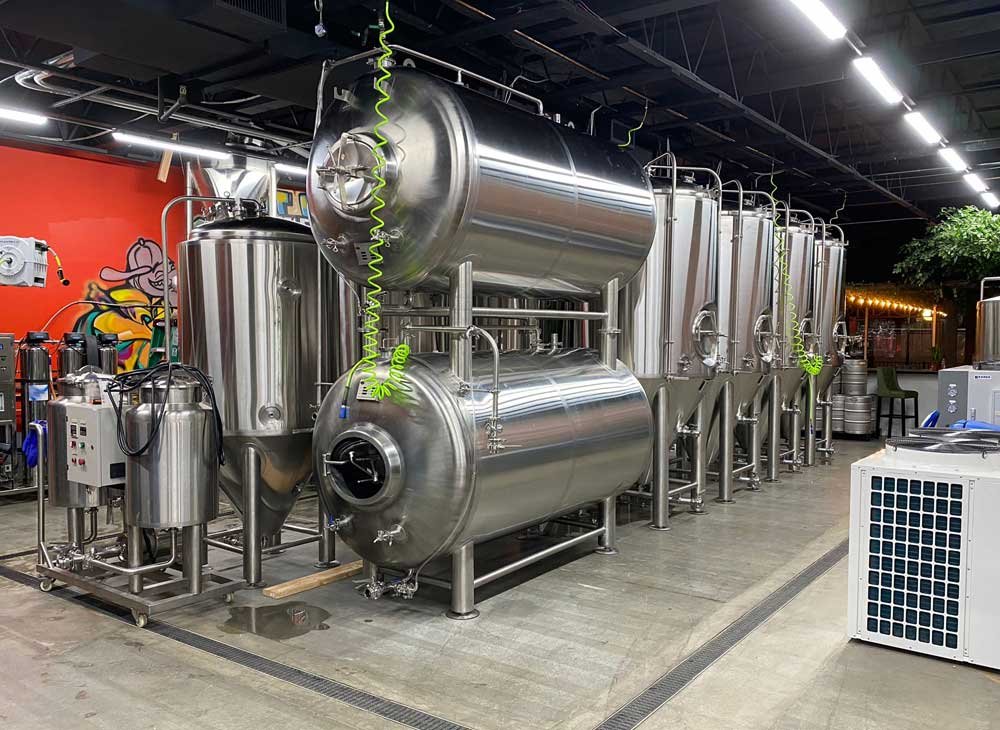
Advantages:
-Space-saving: Require less floor area, ideal for breweries with limited space.
-Better sediment separation: Easier to clarify beer as sediment naturally settles at the bottom.
-Integrates well with vertical piping and level sensors/tubes, more accurate Liquid level height measurement
-Easier carbonation control: Vertical shape can support more consistent CO2 distribution
-Improved cooling: Modern vertical BBTs have cooling jackets on both the body and the bottom head for better temperature control.
Disadvantages:
-Requires higher ceilings: May not fit well in low-height areas.
-Relative challenging cleaning access if very tall tanks.
-Not ideal for direct serving unless installed with dedicated tapping lines.
Best for:
-Breweries with limited floor space.
-Standard production cellars.
4. Summary Table
| Feature | Vertical Brite Beer Tank | Horizontal Brite Beer Tank |
| Floor Space | Smaller footprint | Larger footprint unless stacked |
| Ceiling Height Requirement | High | Relative Low |
| Cleaning Access | 1 CIP ball on top | Usually 2 CIP ball on cylinder top |
| Sediment Management | Better | Slightly less efficient |
| Level tube measurement | More accurate volume indication | Relative less precise volume indication |
| Insulation | 80cm | 75cm |
| Cost | Lower around $200-$500 | Relative higher $200-$500 up to capacity |
| Stackable Option | Yes(If room height is enough) | Yes (Common choice) |
| Best Application | Production cellars | Taprooms, brewpubs, low-ceiling breweries |
5. Conclusion
The decision to opt for vertical or horizontal brite beer tanks (BBTs) should be based on your brewery’s available space, production workflow, and serving needs. We provide fully customized BBT solutions designed to fit your specific layout and brewing process. If interested, please share the dimensions of the space reserved for brite beer tank installation—we can then supply detailed tank drawings along with the required floor area and ceiling height for both configurations.
Please don’t hesitate to reach out for further discussion. Let’s collaborate to choose the tanks that best suit your operation. Cheers!
Damon Zhang
Email: biz@cnbrewery.com
WhatsApp: +86 186 7882 135